Destinations: Dordogne – Caves and Castles
By Nina Heyn
First, some geography and history. Dordogne, the official name of a department in southwest France, covers a large swath of the country east of the coastal city of Bordeaux and belongs to the region of Aquitaine (what Julius Caesar referred to as “Aquitania” in his famous text on the Gallic wars). Dordogne is named after one of the main rivers flowing through this area. A somewhat smaller part of this land is referred to as Périgord, and even more precisely the part in the southeast is named Périgord Noir (from the dark color of its oak woods). This is the area that has the highest concentration of unique tourist attractions: castles, caves, canoe rides, medieval towns, world-famous farmers markets, wineries, gourmet restaurants, historic gardens, and hill trails for biking and horse riding. This is where French children learn history and grown-ups discover the joys of their gastronomical heritage.
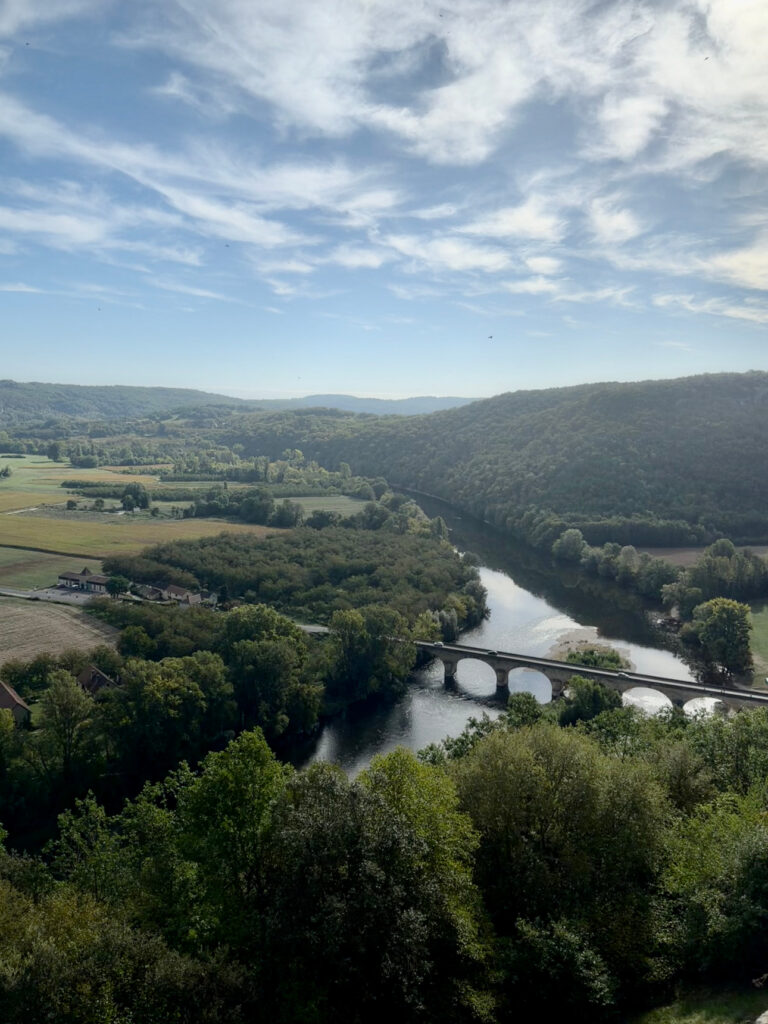
The region’s “Dordogne” name could more or less be synonymous with “French history” because there is so much of it all over the valleys and hills that are criss-crossed with rivers, wineries, and centuries-old villages with churches and medieval castles. Dordogne is also a region considered as one of the cradles of mankind—the place where Homo sapiens (both the Neanderthal and our Cro-Magnon ancestor varieties) appeared in Europe the earliest, starting 250,000 years ago. It is the area with the highest concentration of prehistoric habitation sites, including the famous Lascaux cave, which is sometimes called the Sistine Chapel of prehistoric art.
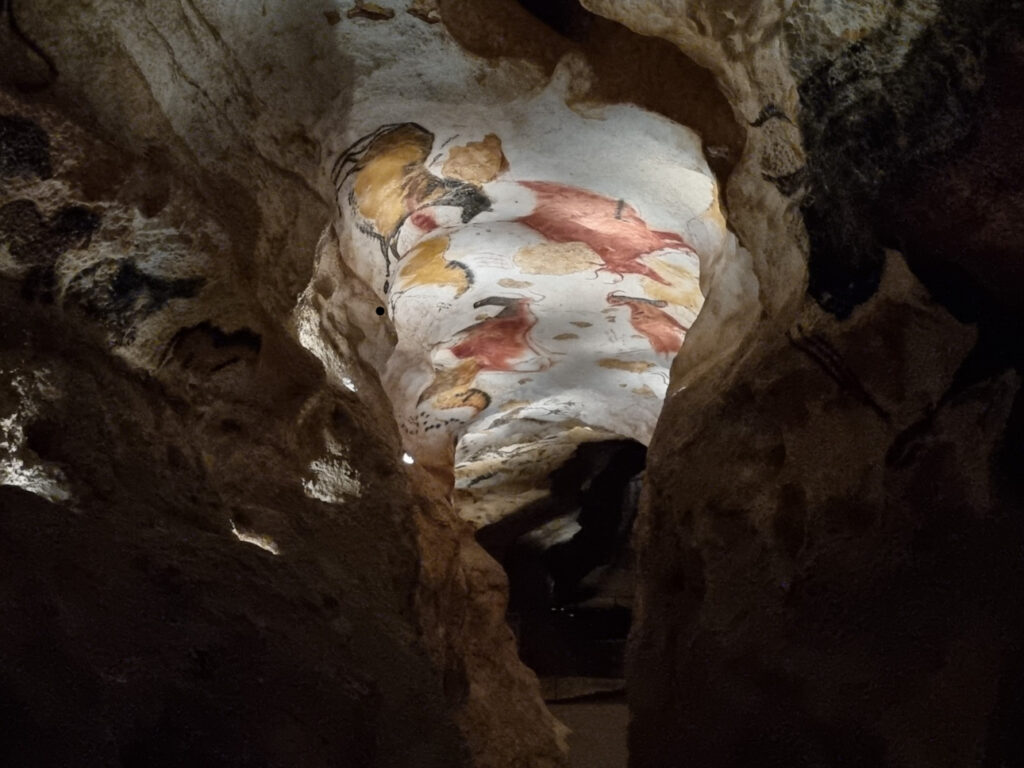
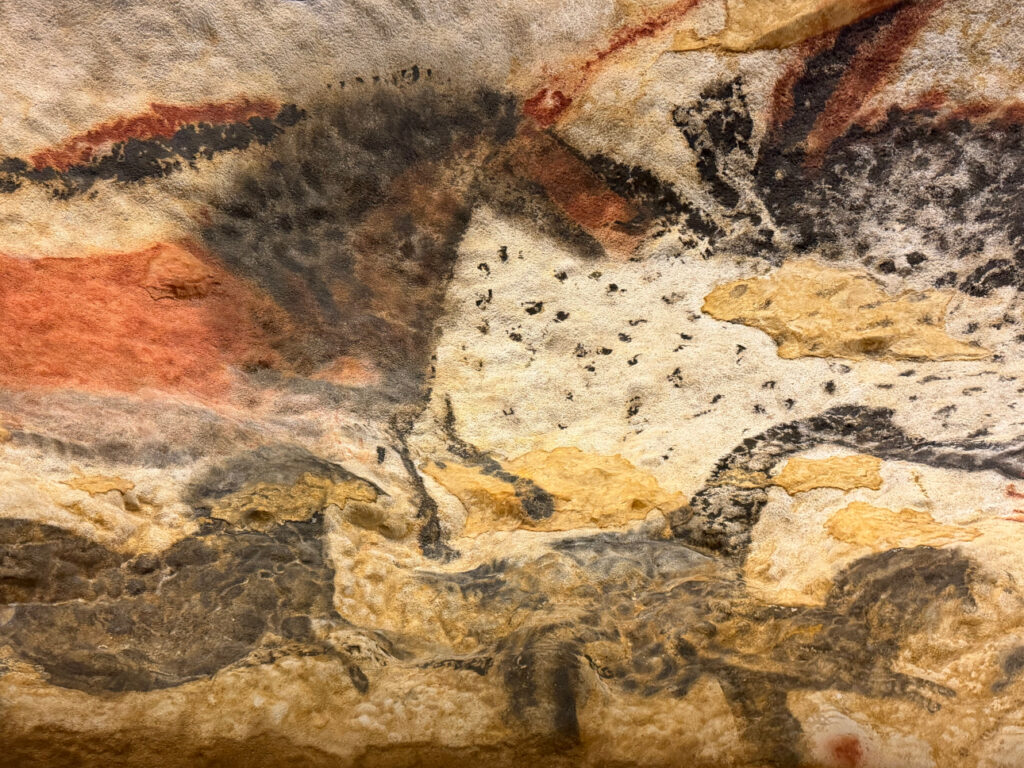
The limestone cave was discovered in 1940 by a youth who followed his dog rooting around a hole. This, in turn, led to a 50-ft drop into an enormous system of limestone caves. He discovered walls covered with hundreds of paintings of wild animals that had not been seen by human eyes since they were created some 20,000 years ago. The original Lascaux cave has been closed since 1963 because visitors’ presence ushered in fungal contaminants, damaging the fragile paintings. Instead, amazingly accurate replicas have been constructed nearby. The older one, called Lascaux II, aims to replicate the experience of pushing through the tight passages through rocks. It is a fairly small site located a few hundred yards from the entrance to the original cave. The latest replica, known as Lascaux IV, is part of a super-modern museum structure that provides a walk through an incredibly faithful large replica of the cave interior as well as an “atelier” where parts of the cave walls are reproduced—and can be filmed and photographed. You cannot take pictures inside the replicas of Lascaux II and IV, so the photos in this story are taken from the “atelier” display.
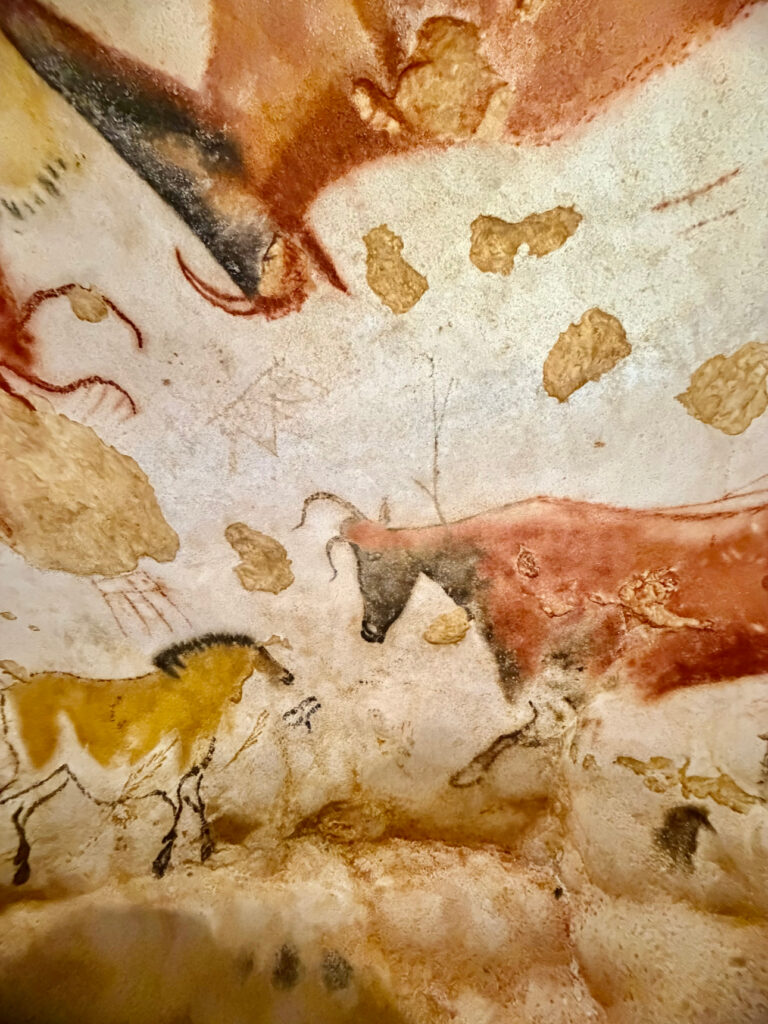
The Lascaux painters lived at a time when Dordogne was a frost-covered steppe teeming with herds of reindeer, wild horses, prehistoric bulls called aurochs, and, in earlier times, the mammoths. Their predators included dire wolves, lions, saber-toothed cats, and bears. Humans were few and far between, hunting what they could and gathering not only food but also red-colored rocks that they would bring into caves and mash into pigments that were used as paint. Caves like Lascaux or Chauvet in southeastern France were not used as shelters; bands of hunter-gatherers lived by the rivers, sometimes sheltering under rock overhangs in the cliffs that provided both shelter and a safe, defensible high ground.
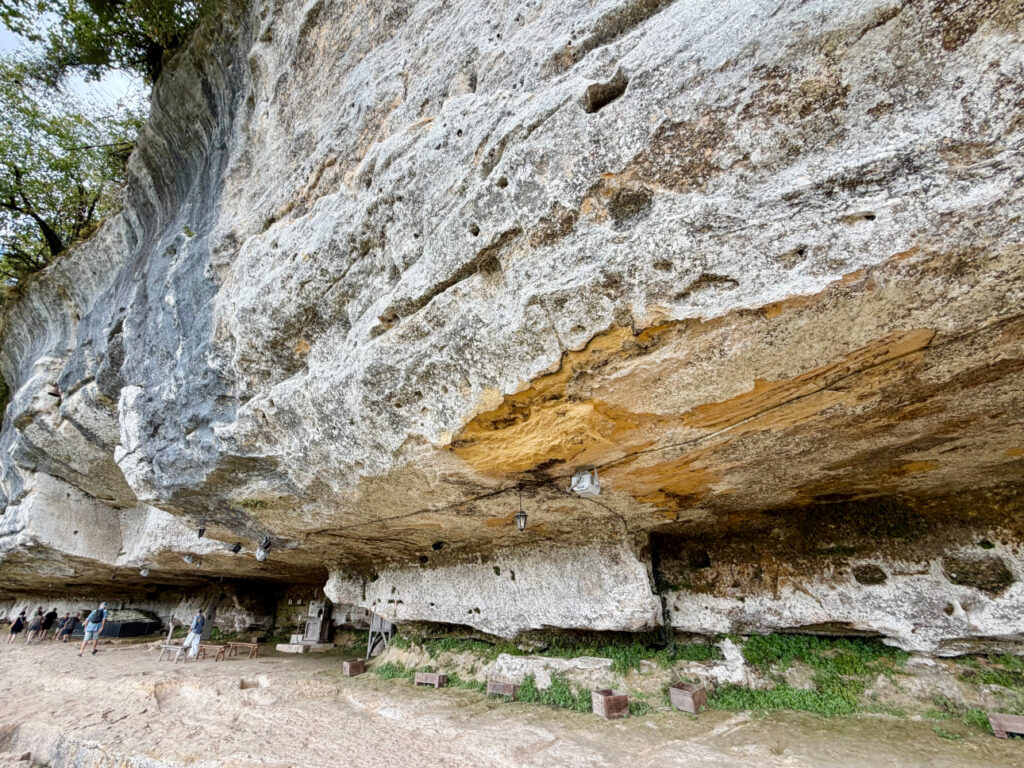
The caves were special places for cult and tribal gatherings, not unlike modern temples and churches. And similarly, they were decorated with sacred art. Red ochre, black manganese oxides, and white limestone provided colors to illustrate hundreds of images of the animals that inspired awe in those prehistoric artists. Interestingly enough, these paintings feature mostly animals that were not human prey. A prehistoric man hunted small rodents and lots of small deer but not huge bisons or mega elk or the wild horses. The animals painted so expressively in the caves are those that were observed and probably admired but not eaten.
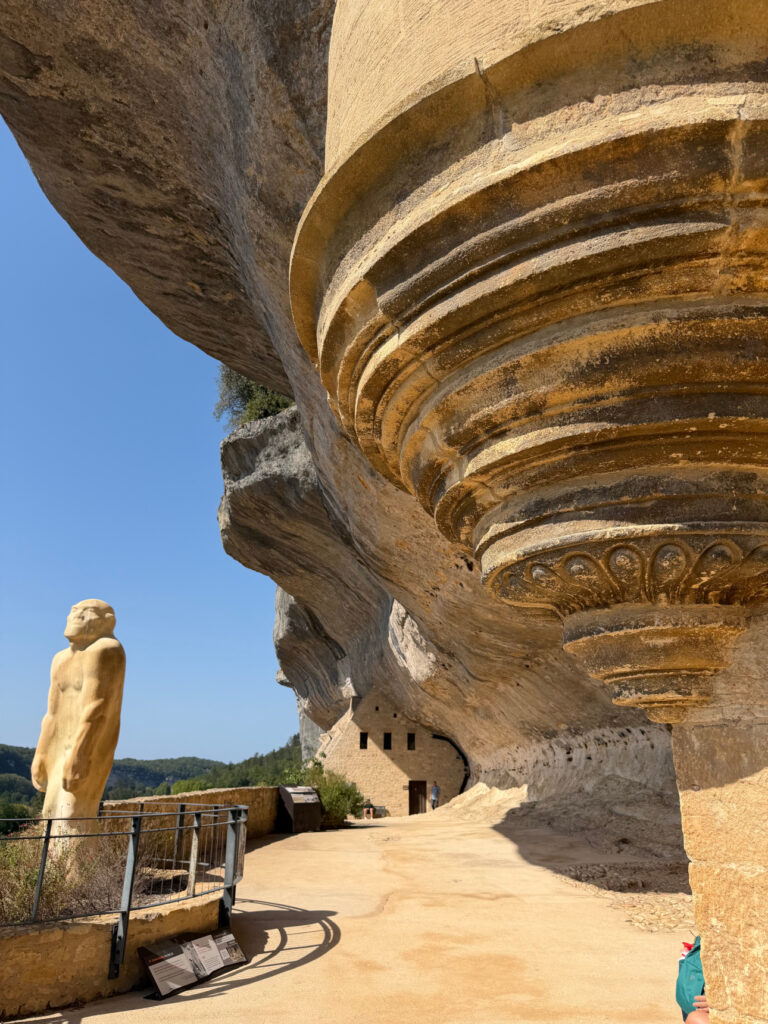
All the tools used in painting the cave walls, as well as any other prehistoric artifacts, are now displayed at the National Museum of Prehistory in the nearby town of Les Eyzies. The museum building used to be a half-ruined castle and is partly built into the rock cliff, resulting in an imposing stone architecture.
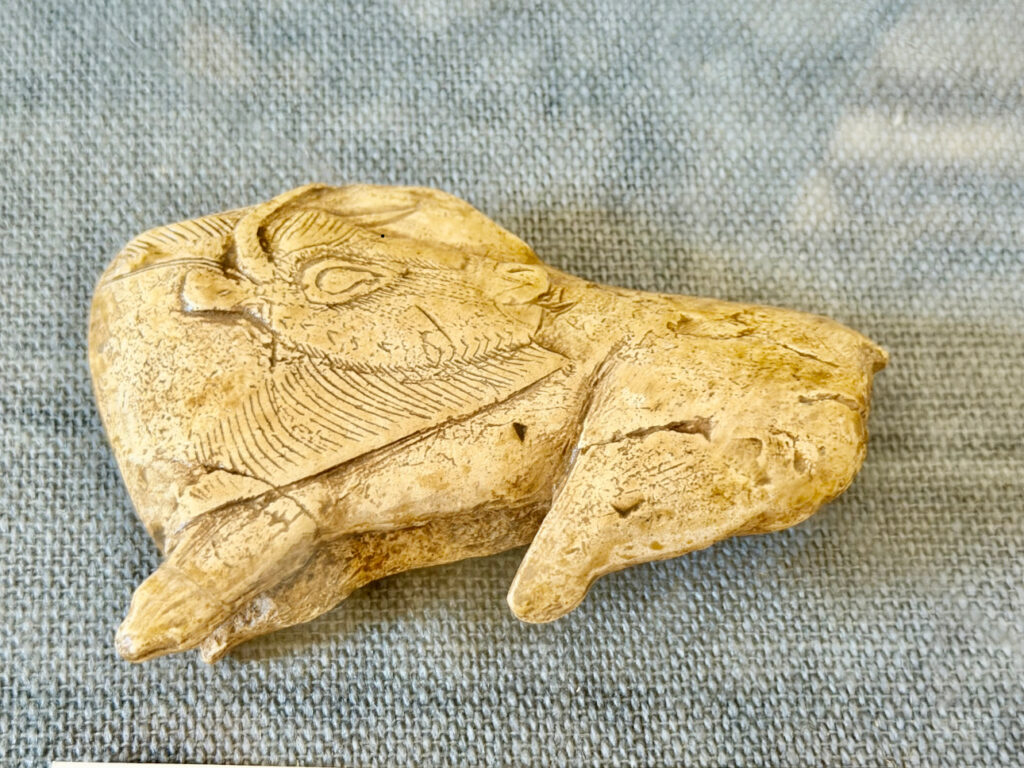
It is also the place where you can see fragments of the original paintings and relief carvings, examine Stone Age tools, and discover what daily life was like for the early humans. The museum displays a huge array of objects connected to the life of prehistoric humans: weapons (harpoon endings, slate knives, stone axes), shell jewelry, stone reliefs, bone and horn carvings of female figures (so-called “Venus” fertility amulets), and animals. Those objects as well as bones of Homo neanderthal, Homo sapiens sapiens, and prehistoric animals tell the story of life in this most fertile valley between two rivers. There are also examples of early art and decoration—head coverings and ornaments made from pierced shells as well as amulets and carvings for tools and weapons. A beautiful bone carving of a bison, his head in a realistic twist, comes from the Gravettian period of about 28,000 to 23,000 years ago.
Some of the region’s caves were never discovered or explored by prehistoric man, and because they were the result of water creating fissures in rock, they would have remained either completely hidden underground or only known as mysterious deep shafts into the unknown depths.
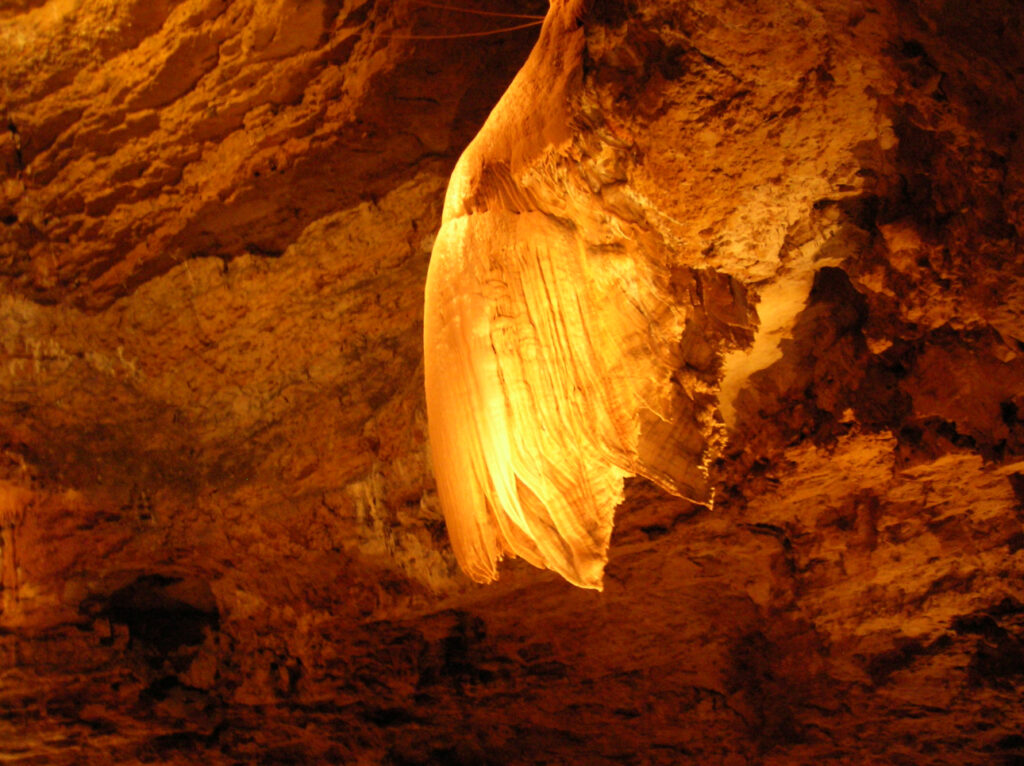
One of them, known as Gouffre de Proumeyssac, was used for centuries as a convenient sinkhole into which forest brigands would throw their victims; it was explored for the first time only in 1907. Lowering themselves in a basket 50 m (164 ft), some local farmers discovered one of the wonders of nature, compliments of water erosion in soft limestone. The shaft opened to a cavern, displaying an incredible spectacle. Calcium-filled water drips created fantastical shapes that resemble frozen waterfalls or giant sea creatures. Stalactites and stalagmites create there a fantasy landscape that comes to life when lit.
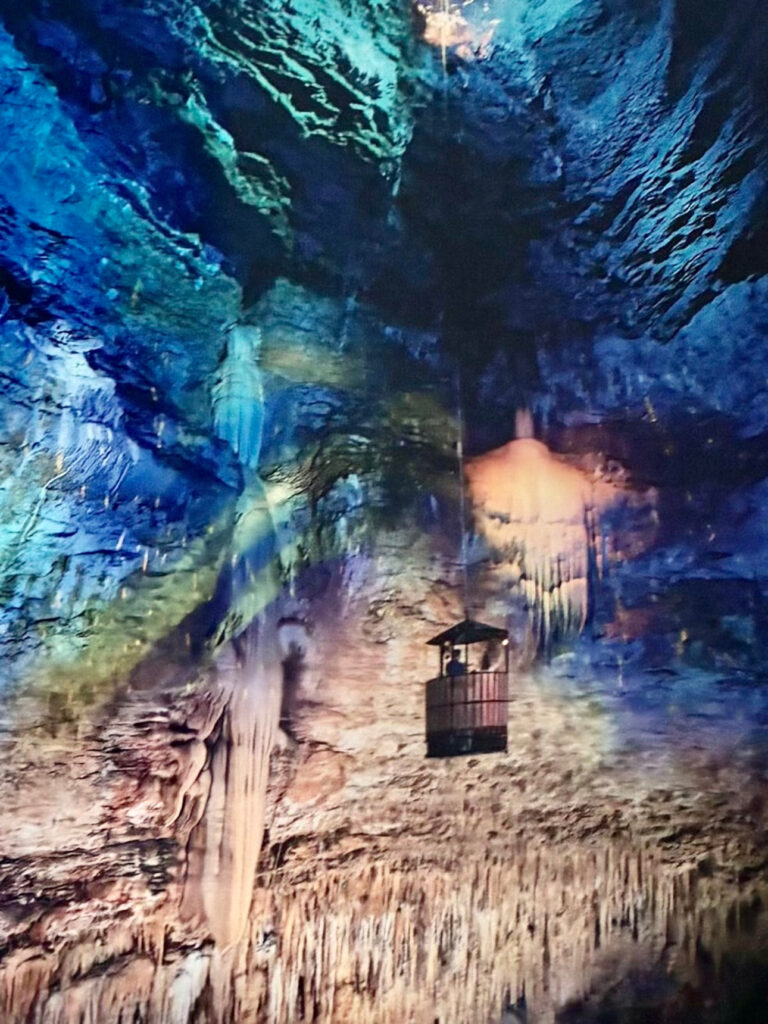
To honor the first exploration of this cave via a rope and wooden cage, there is now a way to enter the cave in a small metal basket, slowly discovering the cave’s stone wonders. Photography is not allowed inside, so here is just a reproduction of the promotional poster, but even this fuzzy image serves to illustrate why this place is now dubbed a “Crystal Cathedral.” There are many other caves in the region featuring similar underground rock landscapes, but this one is probably one of the most spectacular.
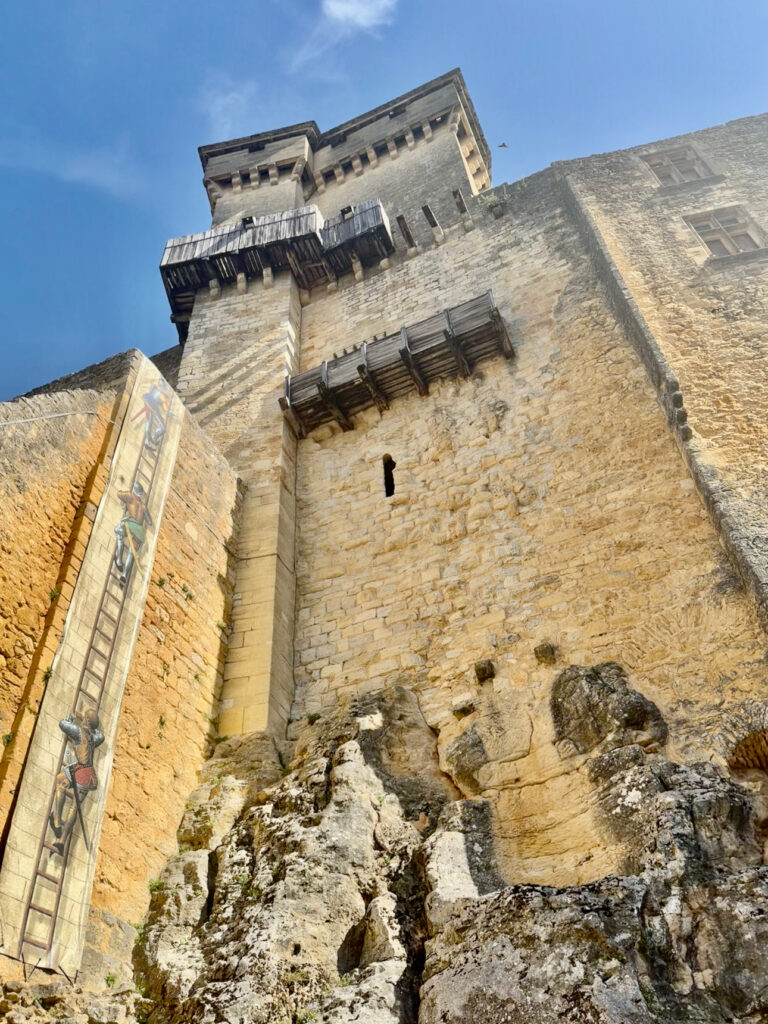
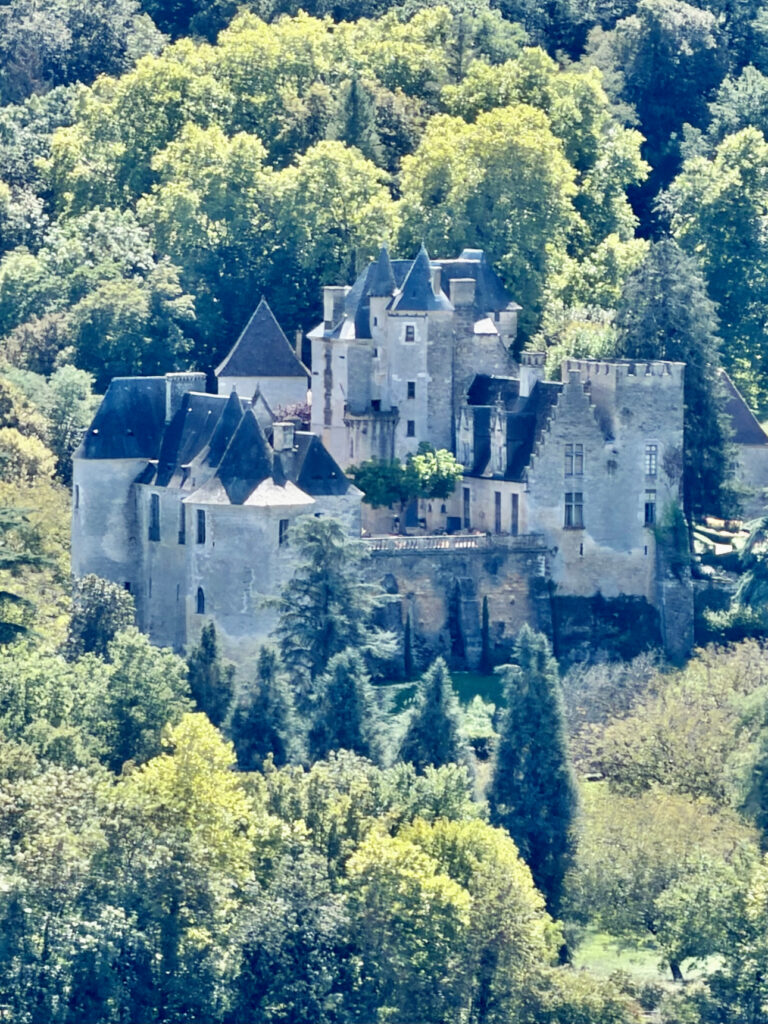
In Dordogne, history does not only reside in the caves. The Hundred Years’ War (which actually took well over a hundred years from 1337-1453) was a conflict between the English and the French, a legacy of the Norman king invading England and the subsequent inheritance claims—especially that of Eleanor of Aquitaine, who was first the ruler of the French lands in Dordogne and then a queen of England after marrying Henry II. After many ups and downs, this war left the French in command, but subsequent wars of religion (that is, conflicts between the Protestant Huguenots and Catholics) ravaged the land and destroyed or damaged many strongholds. All this is still evident in the two imposing medieval castles of Beynac and Castelnaud, which face each other on the opposite banks of the river, a few miles apart.
During the Hundred Years’ War, the castle of Castelnaud changed hands a dozen times. By 1442, the lords of the castle had sided with the English, and French King Charles VII (the same weak but cruel ruler who had to be prodded into action by Jeanne d’Arc) ordered a siege. The two opposing forces were evenly matched technologically such that neither was able to prevail… until human treachery tipped the scales. An English garrison captain surrendered the fortress for a promise of a life spared and the tidy sum of 400 crowns.
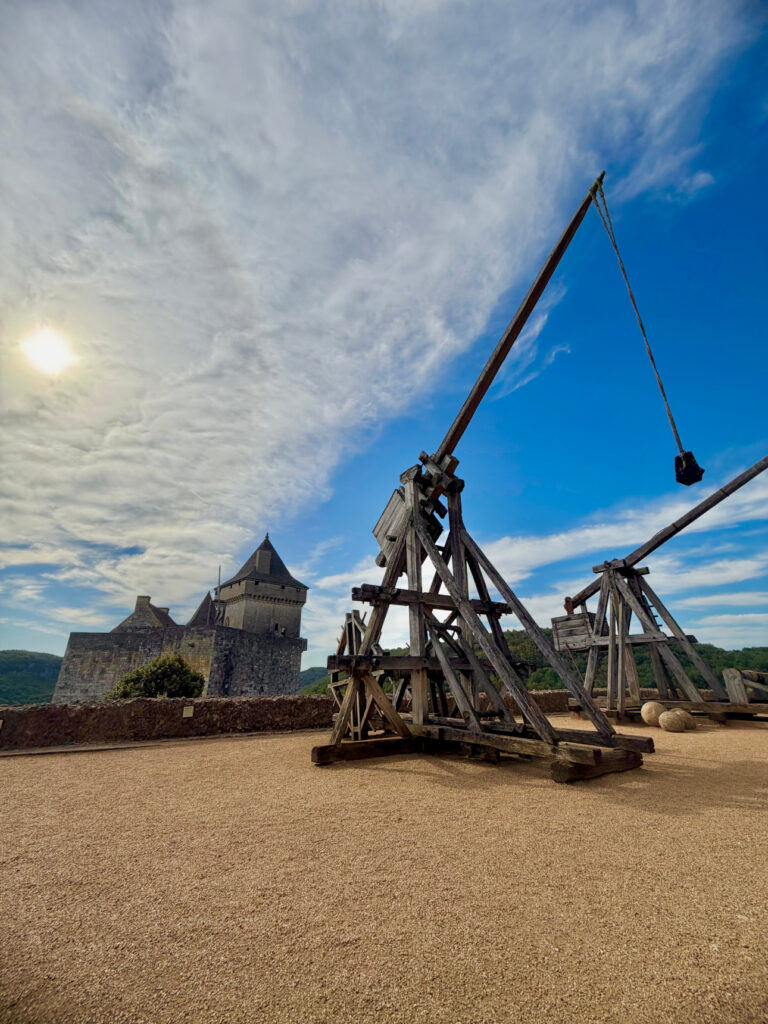
These days, visitors can relive that war by climbing the steep stones of the Castelnaud castle and by watching demonstrations of falconry, iron forging, archery, and the use of catapults. The biggest catapult models, called trébuchets, are massive wooden contraptions capable of launching 100-pound stones. At the castle grounds, the Medieval Warfare Museum exhibits swords, chainmail armor, maces, models of catapults, crossbows, poleaxes, and all the other accoutrements of the medieval art of war.
In the same Hundred Years’ War, the nearby Beynac castle mostly remained in the hands of the French.
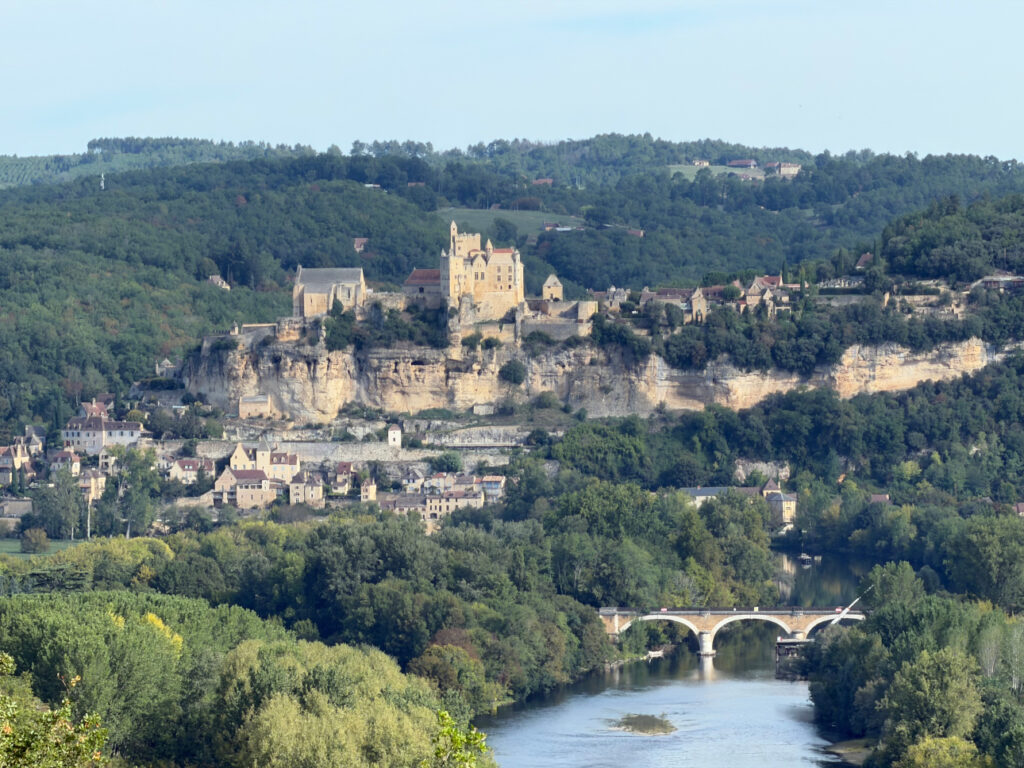
This castle was situated to take advantage of a steep cliff of 150 meters (492 ft) above the river and an equally steep hill road on the other side. In order to access it, you have to climb breathlessly a winding passage between stone walls and cottages—what was an easily defensible route in case of an attack by knights in heavy armor. This location and architecture served Beynac well throughout all the wars, making it an impregnable fortress that dominated the region. The castle has undergone major restorations, and you can now visit medieval kitchens (featured in many French films, including Luc Besson’s The Messenger: The Story of Joan of Arc), gathering halls, an armory, and even a tower chamber that was the private quarters of Richard the Lionheart. All the lords of the area built themselves castles and stone keeps, but Beynac takes the crown as the most elaborate and unassailable one.
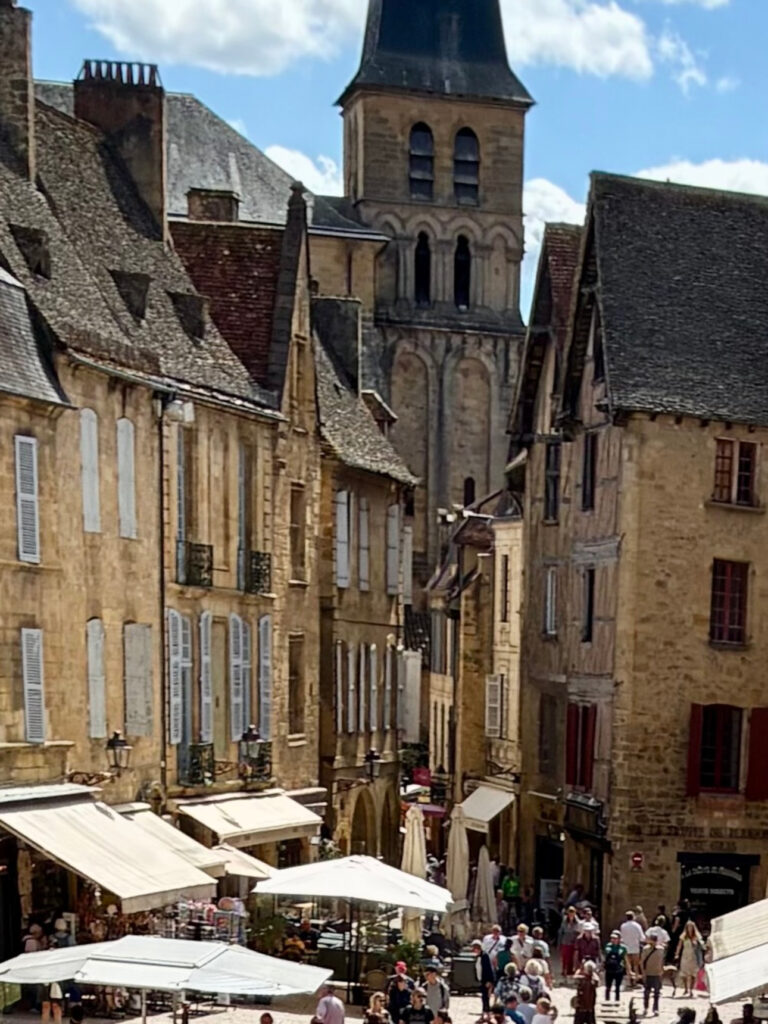
In the heart of the Périgord Noir region is the town of Sarlat. It is a unique old town and has the status of a UNESCO Heritage Site thanks to previous centuries of neglect and one influential writer. The town started as a Roman settlement and was further developed in the 8th century by monks, but was mostly built up in the Renaissance. It went into a steep decline in the 17th century, with the result that its outlandish-looking tall stone roofs were preserved. Sarlat escaped the post-WWII modernization that razed to the ground many a historic building thanks to intervention by André Malraux—the famous writer, resistance fighter, and politician of the President de Gaulle era. As the French Minister of Culture, Malraux established “protected area” zones throughout France, and Sarlat became an early beneficiary of this cultural protection. Today, Sarlat is a bit of a tourist trap with so many people flocking to walk the frozen-in-time town, but even its throngs of visitors cannot deprive this place of its picturesque, fairy-tale look.
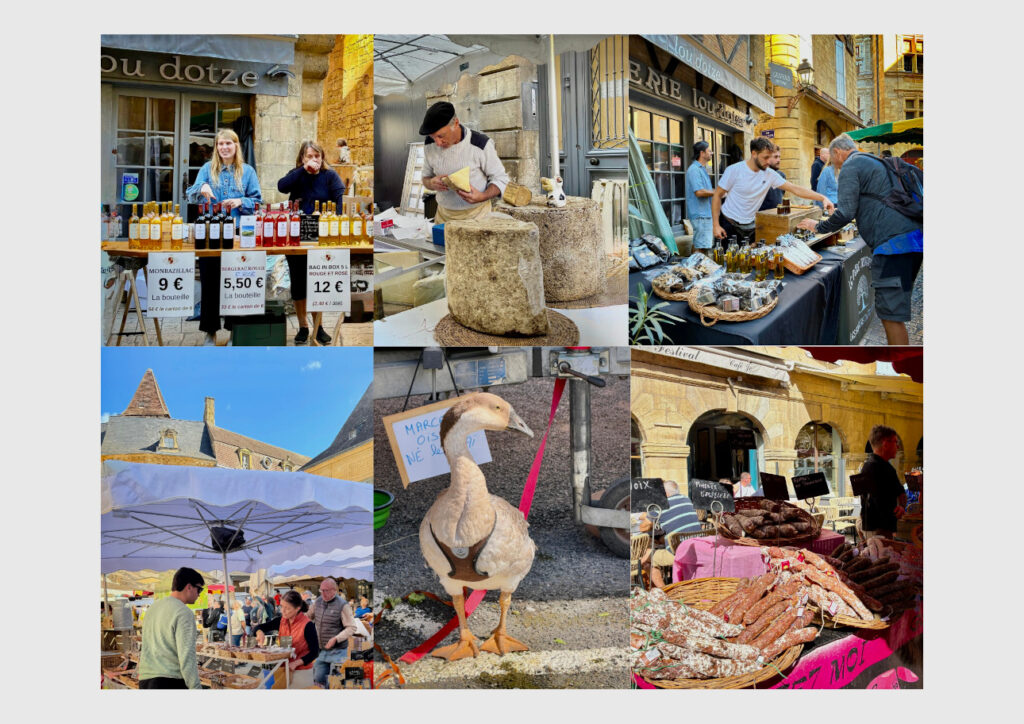
Sarlat is a gourmet capital of Périgord Noir, a region that in itself is considered the culinary heartland of France. This is where famous wines are produced, along with foie gras and other processed meats like patés and sausages, and where orchards are the sources of olive and walnut oil. To see, taste, and buy all these gastronomical treasures, people gather at farmers markets throughout the region. Many small towns hold them one day a week, but as the most famous of them all, Sarlat’s farmers market is held twice a week to satisfy demand. Customers from nearby towns, restaurateurs from half of the country, and tourists from all over the world throng those markets for the best food France has to offer. This is the place for a taste of the freshest vegetables and fruits—sometimes as unique as a hybrid of garden and wild strawberries—or to find the best cheeses, buy the best walnut oil, discover local wines made in small batches, or find delicacies specific to the region such as a boar sausage, foie gras, or black truffles.
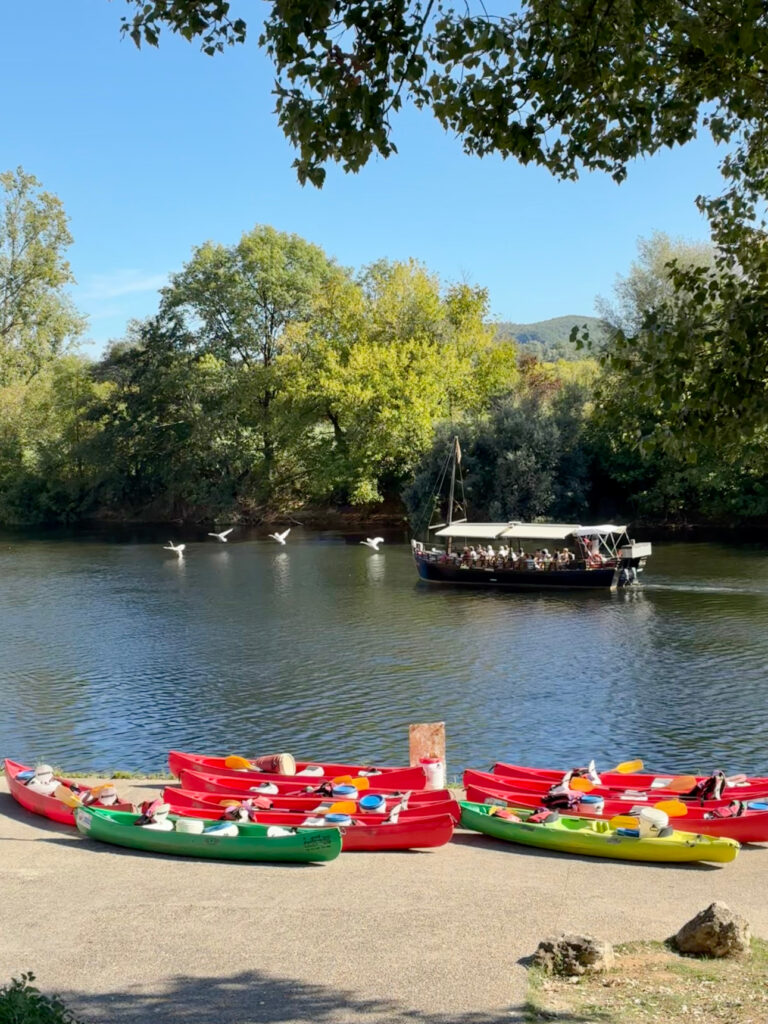
Dordogne is also an example of the principle of “small is beautiful.” The castles and caves may be imposing, but the rest is at human scale. Forest roads are narrow one-lanes, restaurants are numerous but sometimes have barely a dozen tables, rivers are explored in kayaks rather than noisy motor boats, and the landscape is dotted with small farms—either still active as family-run producers of food or converted into small tourist bed and breakfasts. These fertile rivers and valleys have been feeding people for thousands of years, and their unspoiled beauty is the reason people still delight in this place so much.