
Destinations: V&A East Storehouse in London
By Nina Heyn
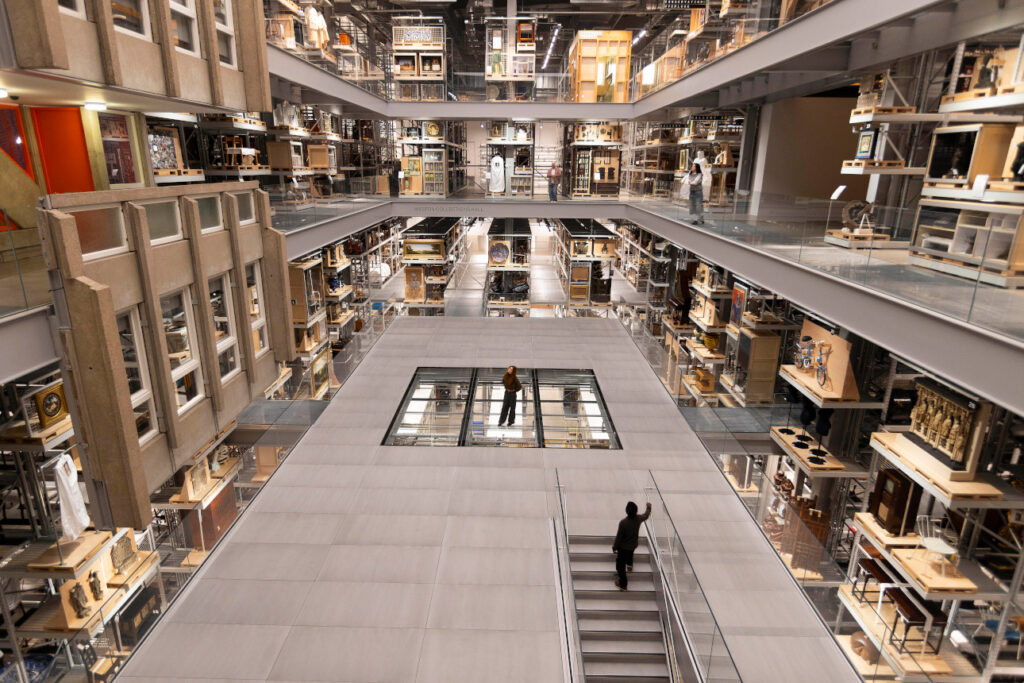
Victoria & Albert Museum, a sprawling red brick pile in the middle of Kensington, is one of the most popular tourist attractions in London, to the tune of almost four million visitors per year. The museum, which holds millions of objects and archival documents, is a mecca for anyone who is interested in material culture—decorative arts, furniture, fabrics, jewelry, sculptures, pottery, photography, instruments—from all over the world, but with a great emphasis on the long and illustrious art history of the British Isles. However, no museum can display all of its riches at the same time, so V&A has come up with a great solution—a place that serves both as a museum storage facility and a public display, all the while bridging its Victorian-age past with the 21st-century multicultural art scene. Last spring, V&A opened the doors to an ultra-modern facility called V&A East Storehouse, which fuses the old model of a traditional display museum with the modern concept of participatory consumption of culture.
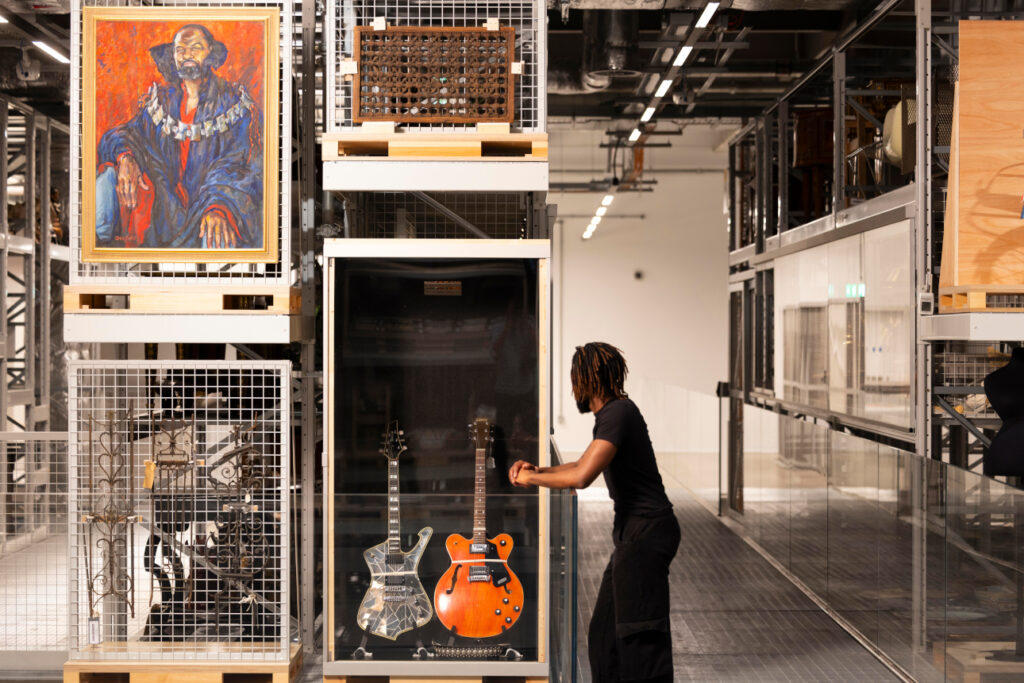
V&A East Storehouse is, as per the opening announcement, a “purpose-built home for over 250,000 objects, 350,000 books and 1,000 Archives.” When visiting, you are first struck by the industrial-style design of the place. It is, as the name indicates, “a storehouse.” What it actually looks like is a “Costco for art lovers,” except that you cannot buy these objects but you can definitely study them. Displays are placed on warehouse shelving, on pallets, and hanging on wire mesh, sometimes stacked altogether, sometimes pulled for display at the end of racks, to highlight some particular subject.
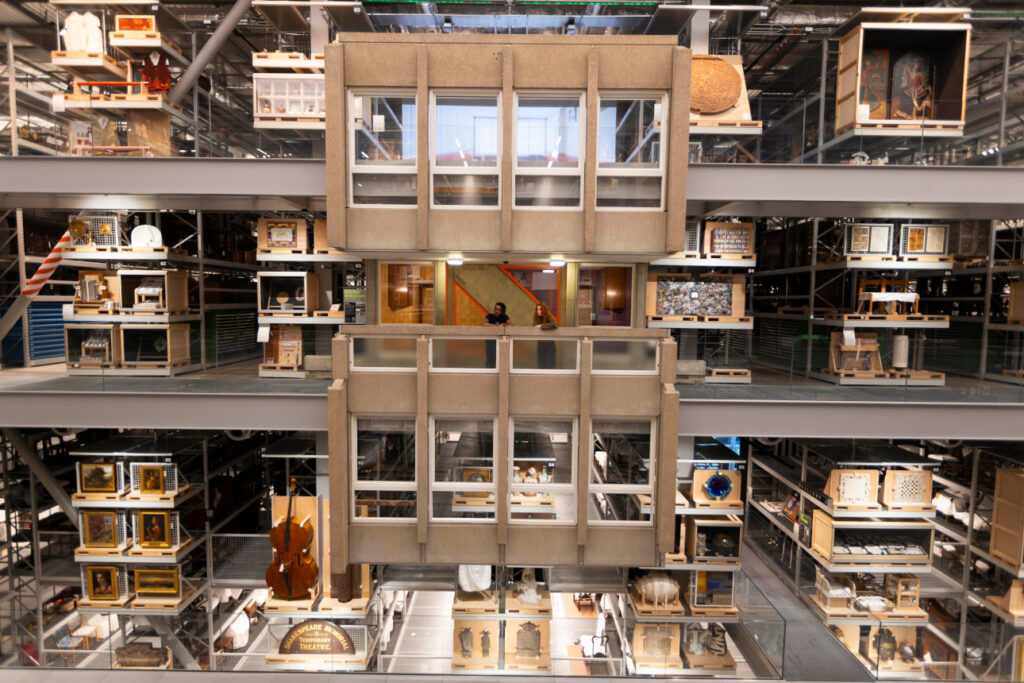
Art Deco vases or 1940s razors, Regency chairs or Mughal marble columns, Victorian stained glass or Pop-Art costumes, real and clever fake Renaissance sculptures—all of it coexists on these shelves in a fascinating jumble. This glorious mishmash is on purpose. Instead of a typical-for-museums way of assembling objects by periods or types in specific places, the curators have mixed the objects throughout the aisles in order to create discoveries, juxtapositions, and the sense of exploration akin to an antique market hunt. Sometimes it gives you the experience of a nostalgia trip (such as when you spot plastic kitchen gadgets, old electronics, and toys from the late last century), and sometimes you are surprised to learn, for example, that there was a whole group of British women pottery artists who, totally uncredited, raised the craft to huge artistic heights in the early 1900s. Discoveries abound, and the warehouse style of the place encourages poking into aisles.
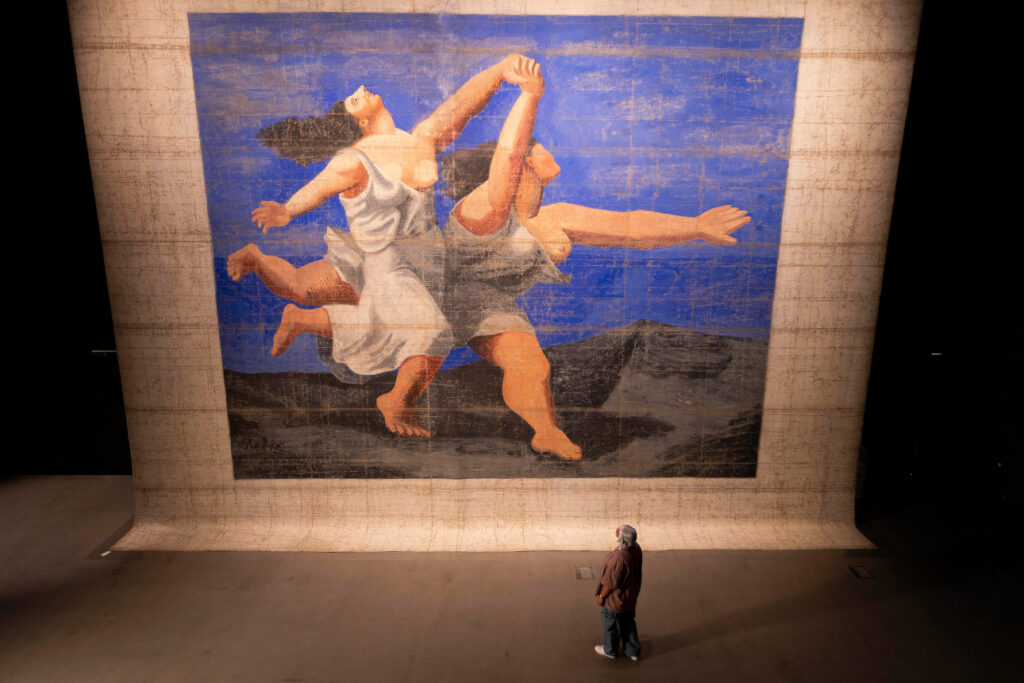
The storehouse is not just a repository of single objects like glassware or musical instruments placed on pallets or shelves. Some of the objects are of historical value, but they are too large for any museum wall. Examples include a stage curtain that Picasso created from one of his own paintings as a decoration for Le Train Bleu, one of the Ballets Russes productions of his (then) friend Sergei Diaghilev. The stage cloth is monumental in size (36 x 32 feet; 11 x 10 meters), and it has not been much on display since the ballet’s performance in 1924.
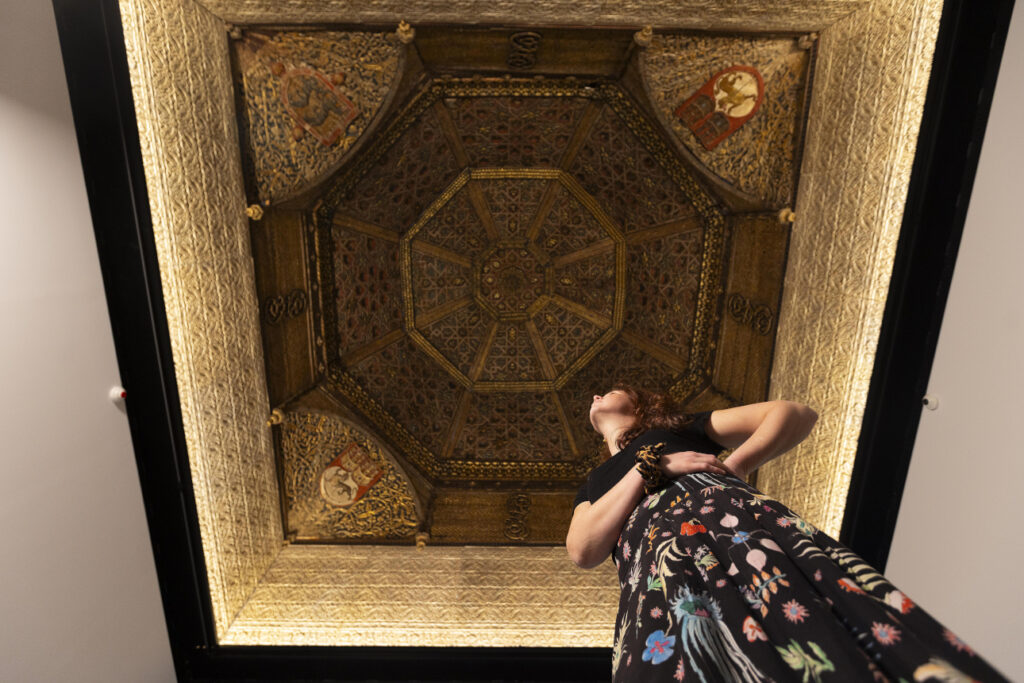
Another salvage from the mill of history is the awe-inspiring wooden ceiling from a palace in Spain. It was built as a wedding gift for the courtiers from the house of Ferdinand of Arágon and Isabella of Castille in 1490, on the eve of an expedition westward to be financed by those rulers for one Christopher Columbus. By 1900, the Torrijos Palace was in ruins and was sold off piece by piece. Thanks to a British collector, the roof itself was purchased and shipped to V&A, preserving the mastery of carving and gilding of this Islamic-style ornamentation.
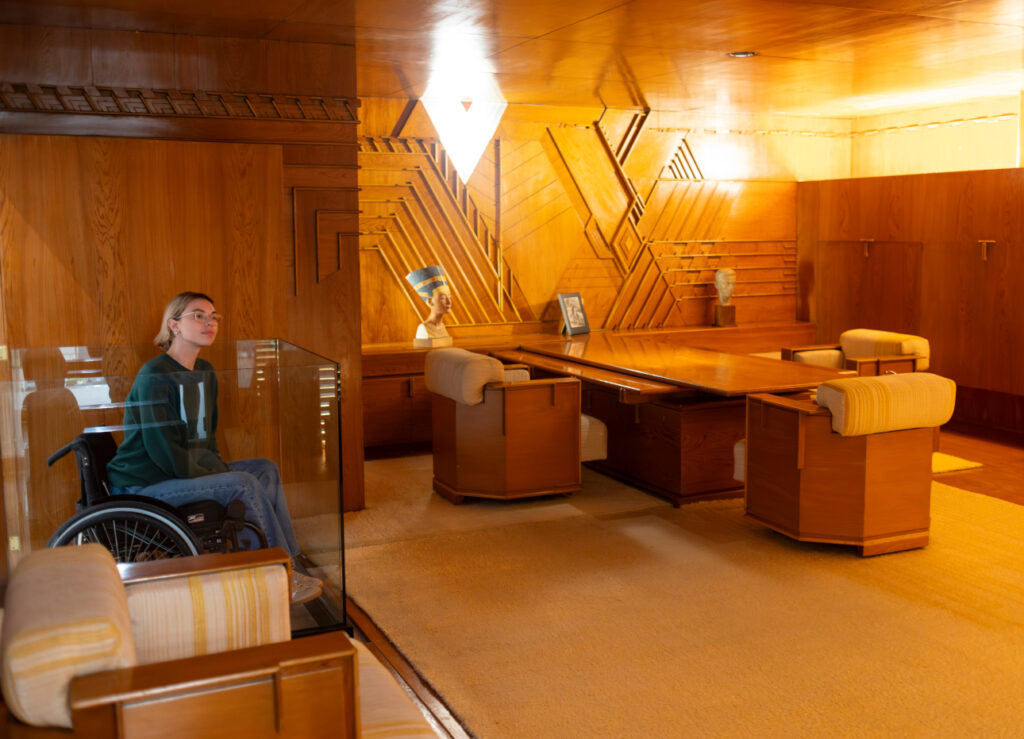
V&A East Storehouse also preserves fragments of architectural history in the form of an entire office room created by Frank Lloyd Wright (oh, this wood paneling is exquisite!) and a 1926 German kitchen by architect Margarete Schütte-Lihotzky, a design which was mass produced in 100,000 sets, and which revolutionized kitchen design so that it is still used today. Under a glass floor, you can even view an entire marble colonnade from a 17th-century Mughal fort in India.
Because some walls and even floors are glass, you can spot interesting levels and areas from afar. One of the glass galleries allows a view of the conservation studio that preserves and studies clothes, fabrics, and costumes. It is a precious tool for fashion designers and students as well as costume and textile artists of all kinds, and it can be visited on a separate tour as well.
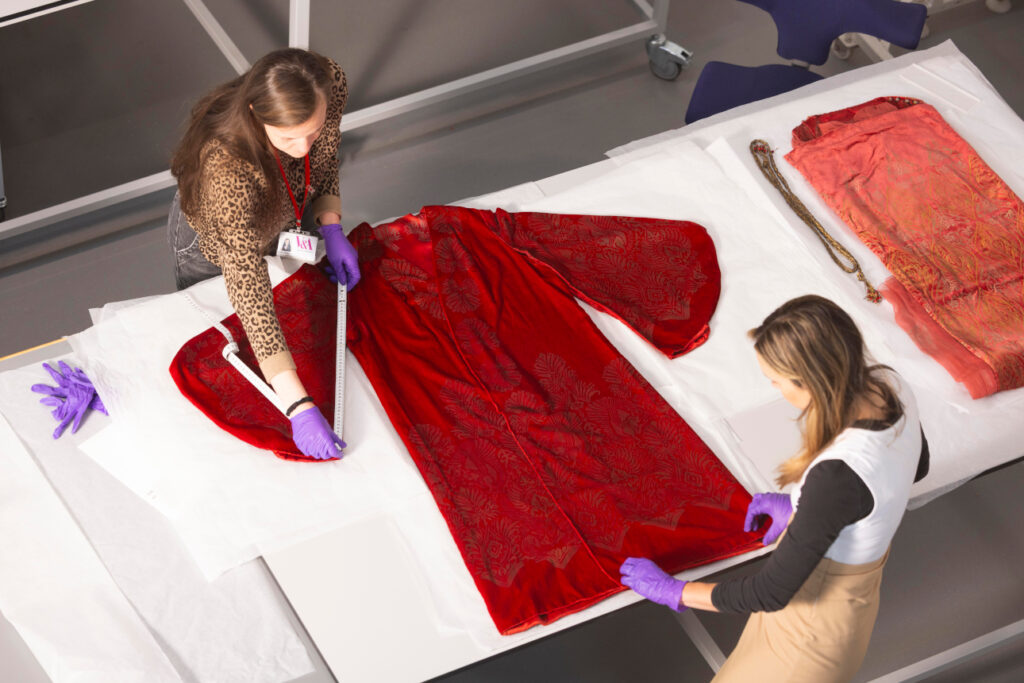
The facility also offers one-on-one encounters with selected objects. You can sign up for a session named “Object Encounters” to examine an object from up close—a unique opportunity for fans, collectors, designers, writers, and historians. So far, among thousands of study orders, the most-requested object has been a 1954 Balenciaga evening dress.
Note: All images above are courtesy of V&A East Storehouse, a unique new cultural visitor attraction and working store, open since May 31, 2025, as part of East Bank in Queen Elizabeth Olympic Park, vam.ac.uk/east
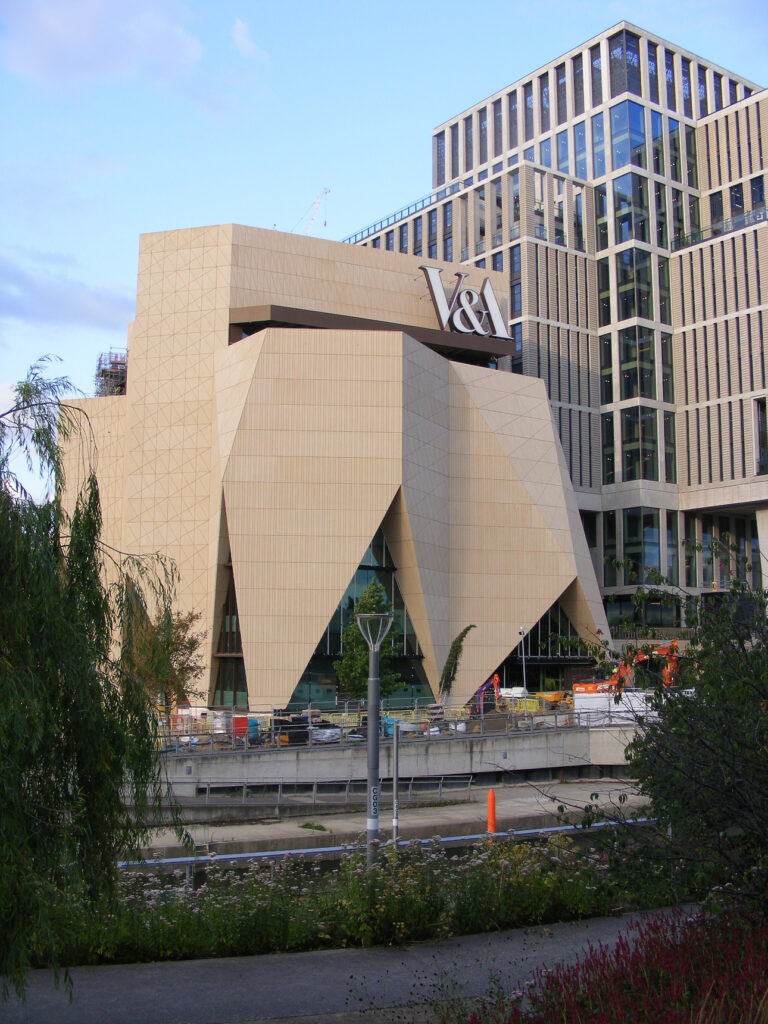
V&A East is expanding—a brand-new museum branch is scheduled to open soon (on April 18, 2026) in the same post-Olympic complex of buildings. It is designed to host exhibitions, events, and gallery shows linked to the museum’s collections and research. As per the launch announcement, “Works by Leigh Bowery, Claude Cahun, Ladi Kwali, Yasmeen Lari and the Heritage Foundation of Pakistan, Althea McNish, Jo Spence and Maud Sulter go on display alongside historic pieces from Italian Renaissance paintings and 16th century scent cases, to an 18th century Spitalfields silk dress and 19th century coral jewelery from India and Tibet.”
If you are seeking a less obvious tourist attraction in London, especially if visiting with family, this unique and modern “art warehouse” is much more fun and educational than the stuffy Madame Tussauds wax museum. The upcoming expansion into the V&A East galleries will make it an even more stimulating cultural experience and worth a trip to London’s eastern outskirts.