
Food For the Soul: Disclosure Day
By Nina Heyn
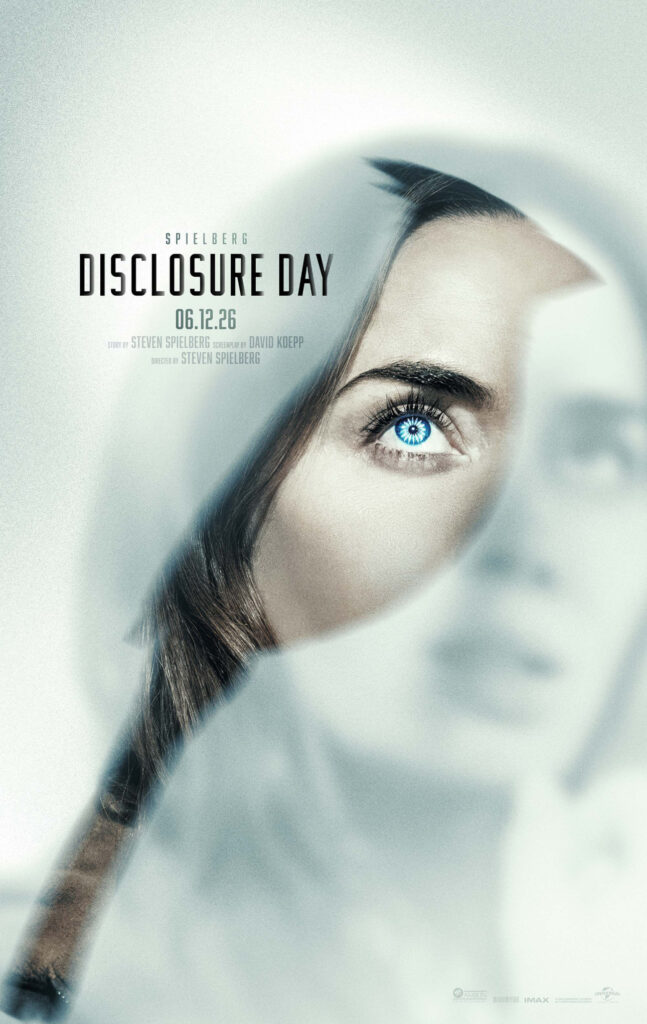
The latest film from Steven Spielberg, Disclosure Day, brings forward his trademark theme of alien visitations. He explores the issue through a race between scientist Daniel Keller (Josh O’Connor), a whistleblower who stole archival footage of the U.S. government’s encounters with extraterrestrials (starting from the Roswell incident in 1947), and the said government (or rather a Private Military Unit in the style of infamous Blackwater), which wants to recover the tapes before Keller can disclose them to the world.
Keller is aided by Margaret Fairchild (Emily Blunt, in a brilliant, nuanced performance), a weather report presenter whose manic energy is soon explained as a compelling need to connect with and help Keller. Margaret feels an inexplicable compunction to locate Keller—a drive reminiscent of that of Roy Neary, the character played by Richard Dreyfuss in the masterpiece of the genre, Close Encounters of the Third Kind—and it has the same source: alien telepathic messages that have been directing Margaret’s mind since her childhood ET encounters. Keller and Margaret are pursued by the sinister Wardex Corporation, which is using alien technology to detect locations and manipulate the minds of people around Keller.
For decades, Spielberg’s films were a touchstone of genres and tropes. His Close Encounters of the Third Kind basically established the entire cinema lore of alien visitations (the sudden other-worldly lights, the look of the craft, the shape of the extraterrestrials themselves). Then he tackled precognition and nanocomputing in Minority Report, in Jurassic Park he introduced us to dinosaurs in movies, his Schindler’s List became the definitive work on the subject of the Holocaust, he made a movie called AI twenty years before this was a thing for anyone other than IT geeks, and of course, he created the gold standard of an exotic adventure quest in the Indiana Jones movies. There is no one else like Spielberg in the history of cinema, a filmmaker who created perfect templates for any genre—from road-rage movies (Duel) to creature-feature movies (Jaws) to war epics (Saving Private Ryan)—following which everyone else took his ideas and style and built upon them for decades. No other artist has influenced cinema to the extent and with the originality of Spielberg. The great filmed entertainment categories—sci-fi, fantasy, action adventure, thriller, war movie—they all owe something to this director’s imagination and craft.
However, in the director’s great filmography, Disclosure Day is a bit different. The Internet culture—with podcasts and shows like The Why Files, Area 52 Investigations, or The Age of Disclosure, as well as micro videos proliferating on all platforms and long-form shows like Ancient Aliens, etc.—has transformed both the knowledge that a casual viewer has of potential ET encounters, and the way filmed entertainment looks and is accessed. A theatrical movie about a long-suppressed government conspiracy to hide extraterrestrial visitations no longer provides an awed revelation in the way that Close Encounters of the Third Kind did. Disclosure Days is perhaps 20 years too late to make the incredible impact that Encounters had in 1977.
The style of narration has also changed—this movie has a slower pace than that served up by action B-movies these days. Spielberg is still the master of tension, such as when he designs a harrowing scene of a car being inexorably pushed under a speeding train, and he can still compose a shot better than most directors and get his actors to deliver flawless but complex performances. Colin Firth, ostensibly a villain in Disclosure Day, is sublime in conveying frustration, regret, and doubt—all of those intangibles that are almost impossible to describe, much less show on one’s face (AI “actors,” eat that!). But… The issue is not with Spielberg’s mastery of the directing craft or the actors’ superb performances—it is that film language and the landscape governing our knowledge about unidentified aerial phenomena (UAPs) have both changed.
Let’s tackle the film style first. Disclosure Day is narrated in a classic style of scenes that follow each other, building toward a predictable revelatory conclusion. Fast as some action pieces are—like the car being crushed by a train or the confrontations between our rebels and the Wardex goonies—they still feel slower and more static than audiences are used to. This is because since about 2000 (and Spielberg’s Minority Report came out in 2002), cinema and gaming have been inundated with frenetic movement visuals: Statham action films, the Fast & Furious movies, fantasy video games, quick-montage, zippy superhero scenes in Marvel movies, and so on. We are now used to action sequences happening without any regard for veracity, the laws of gravity, or the abilities of a human body—but made with impressive CGI in a lightning montage of cuts. The “real action” of a car being pushed underneath a train feels slower and old-fashioned, even if this is much closer to what it would feel in real life.
The bigger problem with the movie is not the style, since Spielberg’s mastery of his craft still feels like the smoothest ride for the senses, but the content itself. The culprit is the online proliferation of testimonies: home-made compilations of UAP spottings (bright lights over major cities, Air Force footage), confessions of abductees and retired military, the descriptions of whistleblower engineers like Bob Lazar of alien craft propulsion, and more—and then the crowning “gift” of recently released Pentagon files. Whether this abundance is the result of a natural increase in available information, a false-flag operation, or preparation for real disclosure, the effect is the same—a movie that presents as a revelation the idea that Earthlings are not alone but have been deceived for decades is not going to make a huge impact on today’s audiences. They all have cell phones, and they watch the same videos all day long.
So, we are left with an expert chase thriller. A big part of the story is devoted to the ways in which Keller and his helpers try to evade the Wardex heavies, with both sides using alien tech. This alone is a good commentary on the vile nature of some humans—let people have any technology, from a stick to a mind-manipulator, and sure enough, someone will use it for violent ends. There is also a humanistic message—that people deserve to know if they are not alone in the universe and that suppression of any knowledge is a crime against the people—but in today’s cynical world that has learned a lot about the subject from Wikileaks and government whistleblowers, even this message feels less impactful.
For film fans, Spielberg has made this movie a compendium of his past tropes, ideas, and characters that can be discovered like Easter eggs. Margaret, with her newfound mental ability, can hail to “precog” Agatha from Minority Report, while the Roswell incident has already appeared in Indiana Jones and the Kingdom of the Crystal Skull, the fight to reveal public-interest information evokes The Post, and a connection to Spielberg’s seminal E.T. The Extra-Terrestrial from 1982 is revealed toward the end of this story. With the body of work by this director, there is no lack of satisfying visual and thematic references.
Even if the central theme of disclosure does not feel like an earth-shattering revelation in the way that Close Encounters of the Third Kind felt to anyone who was a cinemagoer in 1977, we are still left with what Spielberg does best—excellent summer entertainment (albeit for the older audiences since Gen. Z-ers will be harder to impress), an original story (refreshingly, this is not sequel number 59 recycling the same characters and storylines), a subject for discussion (are we alone? is the fact of alien presence being suppressed? is this preparation for a real disclosure? is this an elaborate hoax serving sinister means of global control? etc.), and also a very good “Friday night out” option, which for a long time now has been scarce in theaters. After all, movies are for entertainment—something that the majority of filmmakers much less talented than Spielberg have never learned.
Enjoy the summer!