
Food for the Soul: “Matisse 1941-1954” Exhibition in Paris
By Nina Heyn
Old age is nobody’s friend but even less so in the case of a visual artist. In 1941, Matisse endured abdominal surgery followed by life-threatening sepsis. His arthritis and eye problems had also gotten worse. These health problems meant that he was often bedridden and unable to sustain the rigor of standing for hours at an easel.
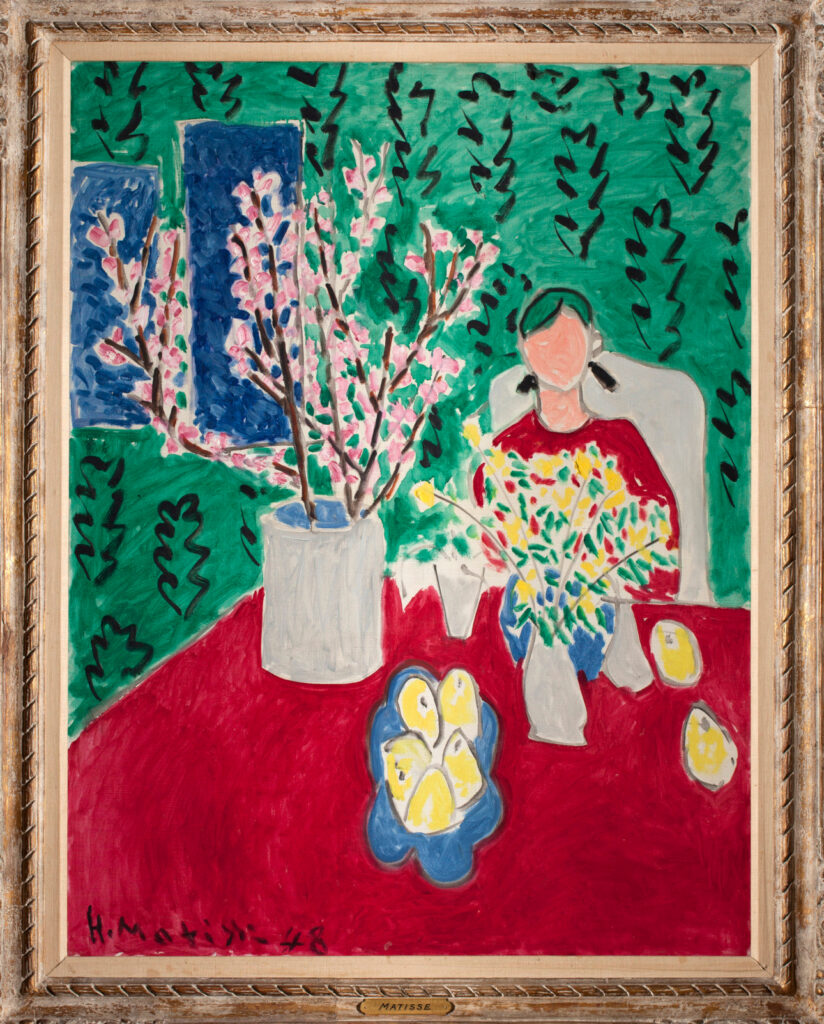
However, the last 15 years of his long career were an illustration of the old adage that if life gives you lemons, you learn to make lemonade. Matisse was less and less able to stand at an easel and to arrange fabrics and models for posing as he had done for his odalisque canvases. One painting from this period is Branch of Prune Tree, Green Background, which features a model at a large red table, dominated by a huge pink bloom that a fruit tree can sometimes produce with such abandon. The colors are vibrant, and the composition is quintessential mature Matisse; this is truly a perfect painting. Painted in the late 1940s, this was one of the last of his oil paintings; by then, Matisse was no longer wielding a brush but scissors.
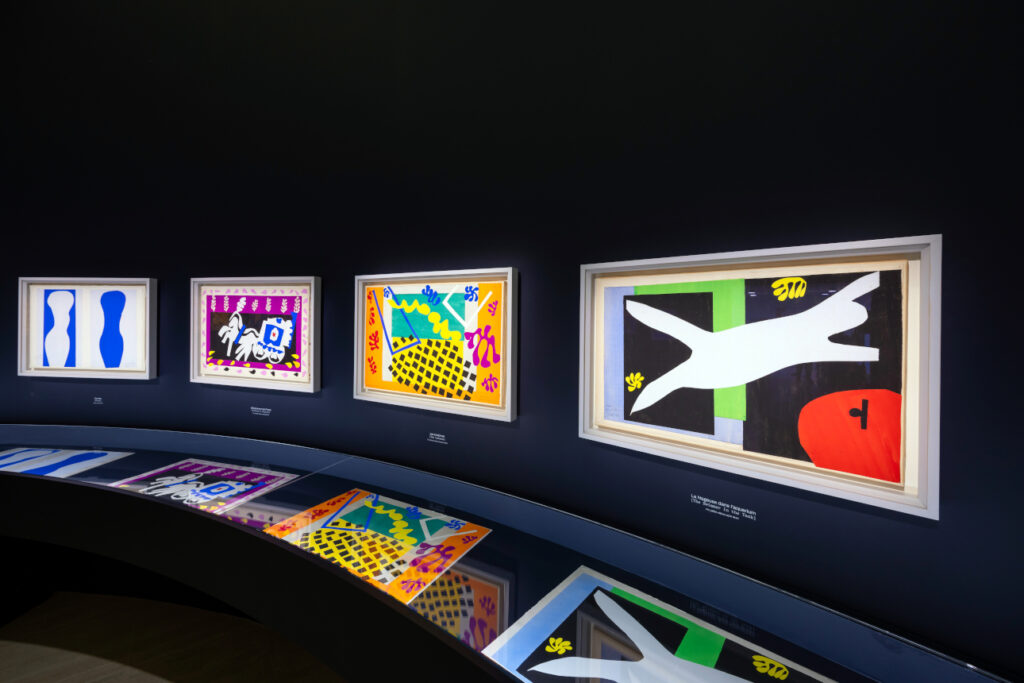
In the 1940s, Matisse started experimenting with an art form he half-invented, making large compositions and paper cutouts. Some early ones were projects for book covers and posters. In time, they became stand-alone works in the size and format of typical painted canvases.
The recent Paris exhibition at Grand Palais titled Matisse 1941-1954 created a chronological panorama of Matisse’s adventures with paper, from his early book designs through his famous album of compositions titled Jazz to his large and very abstract series of Blue Nudes. Matisse was aided by Lydia Delectorskaya—his assistant, muse, and partner—who would color papers and assemble them according to his instructions. The exhibition featured documentary footage of Matisse working with her on his assemblages. It is fascinating to watch how he would wield enormous tailor shears with the speed and grace of a fencing master, cutting the shapes that he wanted without any previous outlining—all the shapes and lines had already been in his head.
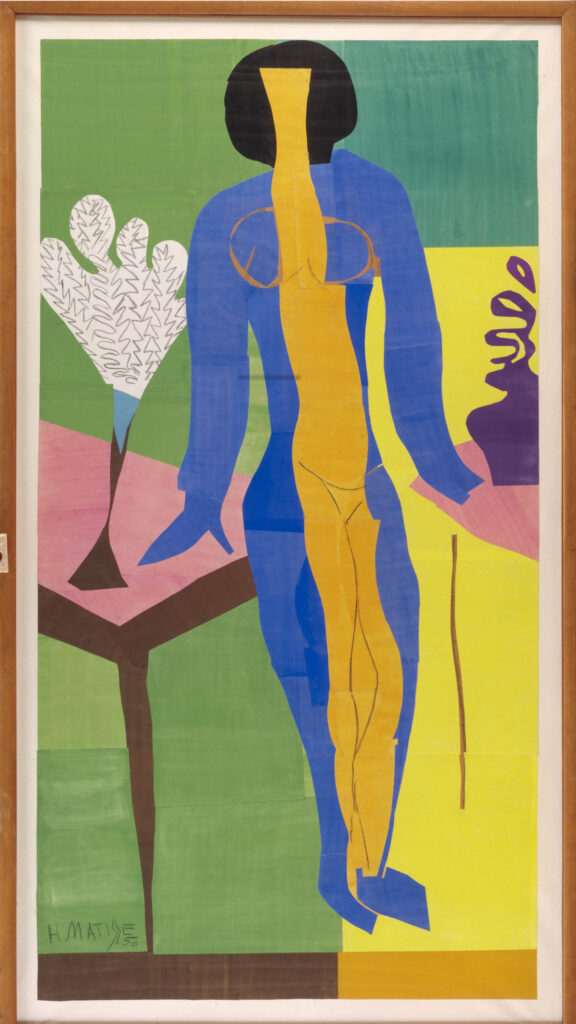
A paper cutout titled Zulma, from the early 1950s, could be called a “transitional” piece. It features an image of a woman done in a typical Matisse style and pose, except that this is not an oil painting but a collage of paper colored with gouache paint. This is one of his last “figurative” compositions. Later on, Matisse’s cutouts would become much more abstract and symbolic.
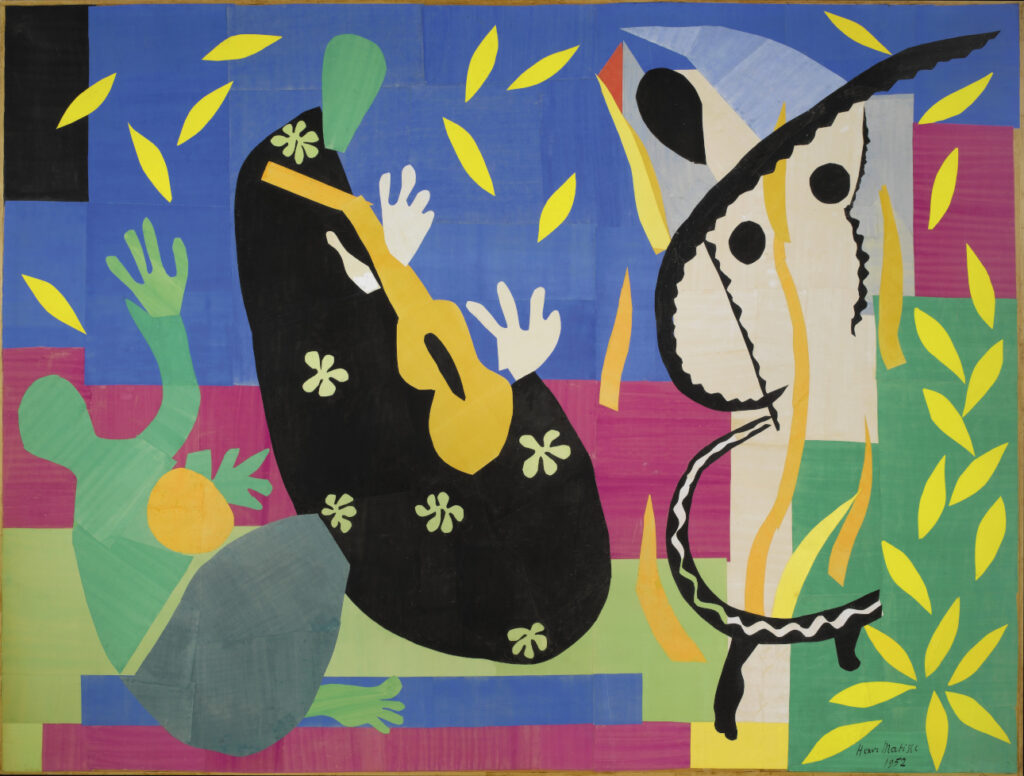
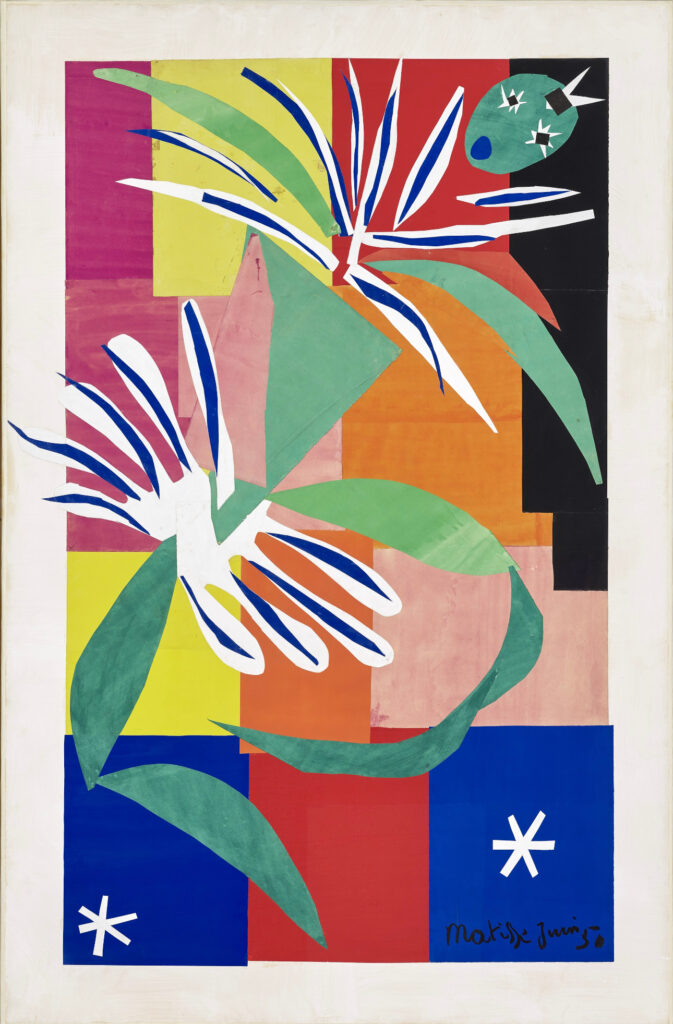
A perfect example is a wonderful composition titled The Sadness of a King / La Tristesse du Roi. A fiesta of colors from cobalt to lime green, it is a scene of Salome dancing in front of Herod. Matisse referenced here Delacroix’s and Moreau’s biblical paintings, but he interpreted the theme with a modern 1950s vibe: post-Cubist shapes, neon colors, abstract lines, and the directness of a jazz music poster. It’s a masterpiece in paper cutout—fresh and alluring 78 years after having been created from pieces of colored paper by an octogenarian artist.
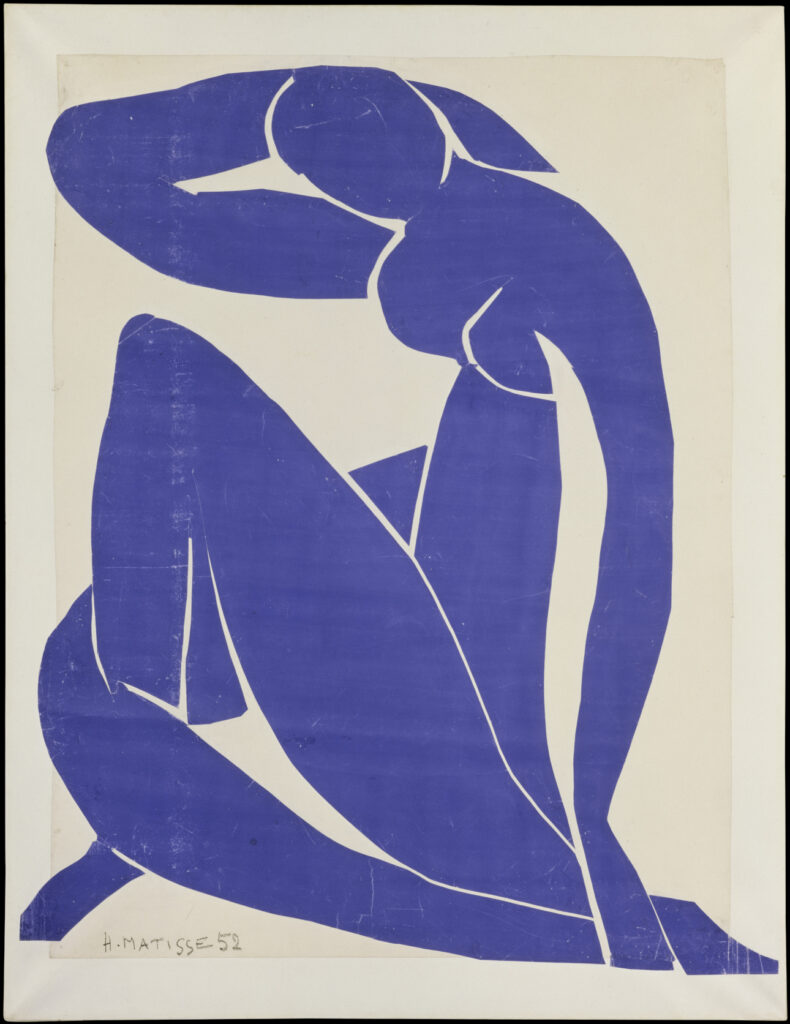
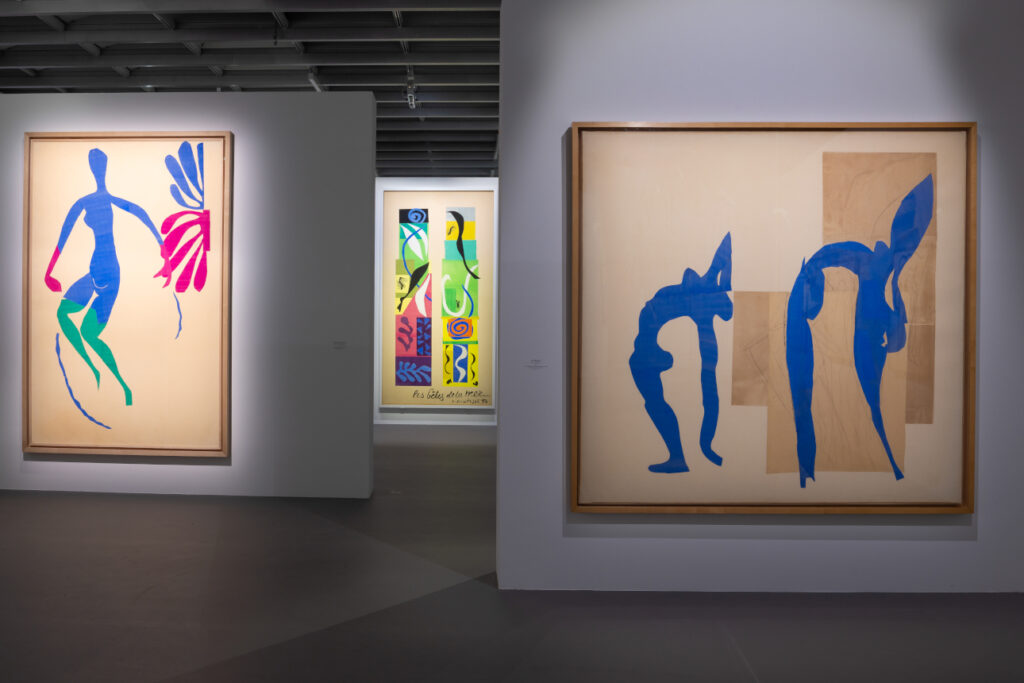
Some of the most famous Matisse cutouts form his series of nudes in various poses, all done in the same cobalt blue. No longer is the viewer distracted by the orgy of beautiful colors featured in the Sadness of the King. Instead, the artist commands the viewer’s attention toward the pure shapes he has created; in the Blue Nudes series, it is the form that provides the sense of beauty and harmony.
Matisse never lost his visual prowess, creating visual masterpieces until the very end. His cutouts are as seductive and joyful as his masterpiece paintings from half a century earlier.