
Food for the Soul: A Postcard from Lublin
By Nina Heyn
Traveling throughout Europe, you can make cultural discoveries almost everywhere you go. I recently visited the eastern Polish city of Lublin to check out an exhibition devoted to my favorite subject: women in art. The show, meticulously prepared for years by the Lublin branch of the National Museum, was provocatively titled, “A Woman and a Paintbrush? Nonsense!”—a quote from a 19th-century art critic who was surprised that women also could be painters. The profession was indeed male-dominated, but the artworks showcased in the exhibition demonstrate that women artists of the 1850-1950 period were as multitalented as their male counterparts—though unfortunately, mostly forgotten.
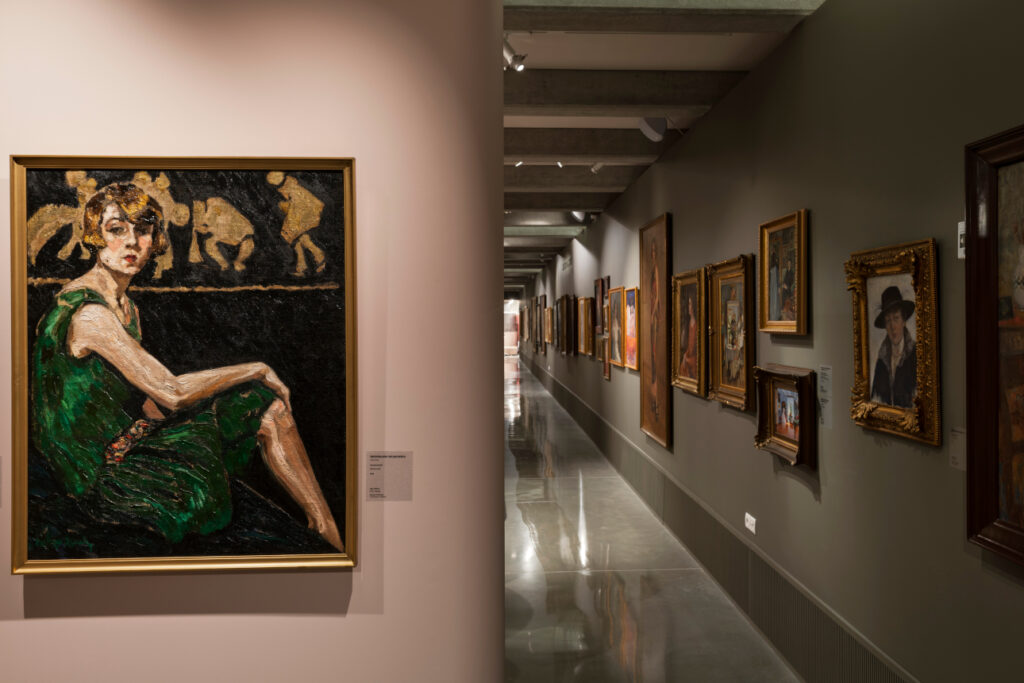
Although the exhibition brought over canvases by some of the leading women artists of the pre-WWII period—such as Olga Boznańska, who I have extensively written about, as well as internationally recognized Expressionist Mela Muter and Paris-based mixed-media pioneer Alicja Halicka—the majority of works presented came from the hands of women artists who, to the present day, remain practically unknown. The curators of this exhibition made a herculean effort to ferret out works by those unknown painters and sculptors from tiny local galleries, warehouses of national museums, and some private collections.
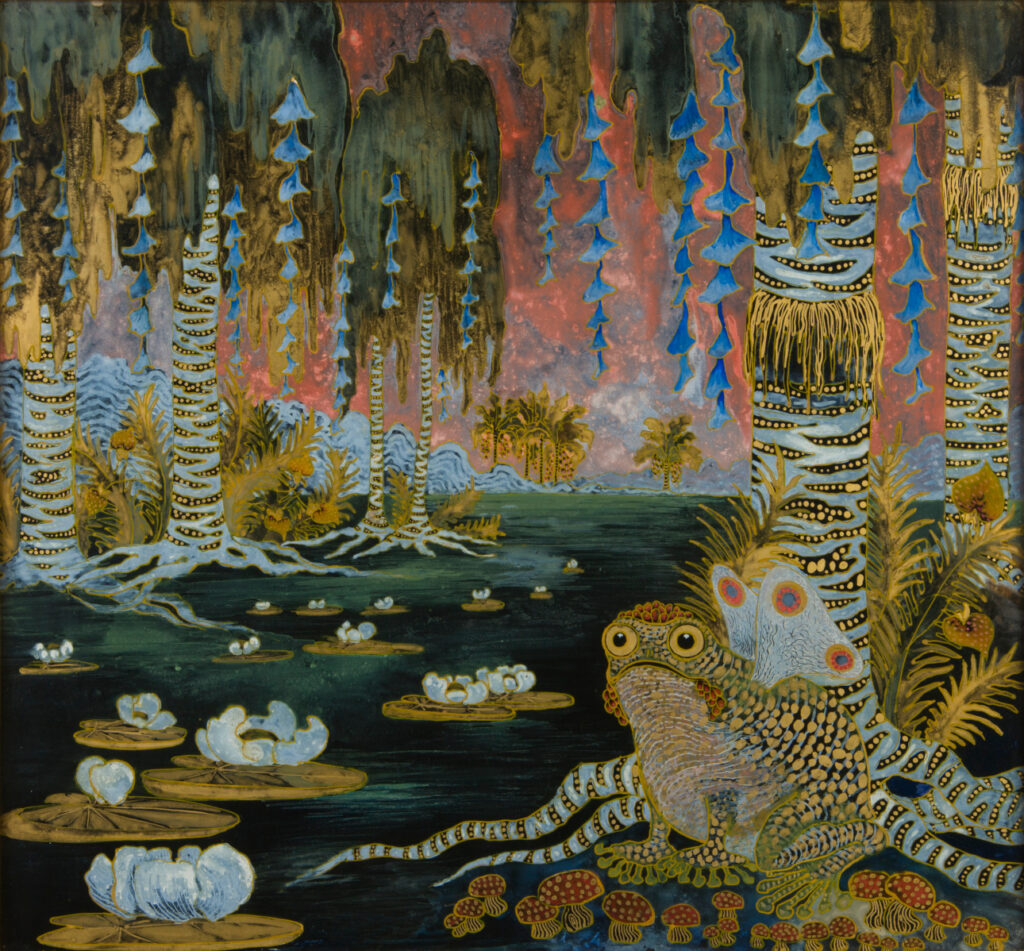
A perfect example of a mostly forgotten painter would be Michalina Janoszanka (see picture at the top of this post), who is mostly known as a muse of the symbolist Jacek Malczewski but who was also an artist in her own right. Her paintings on glass were part of a modernist revival of ancient folk techniques and themes (similar to but independent of such female artists of the period as Gabriele Günther in Germany and Rebecca Salsbury James in the U.S.).
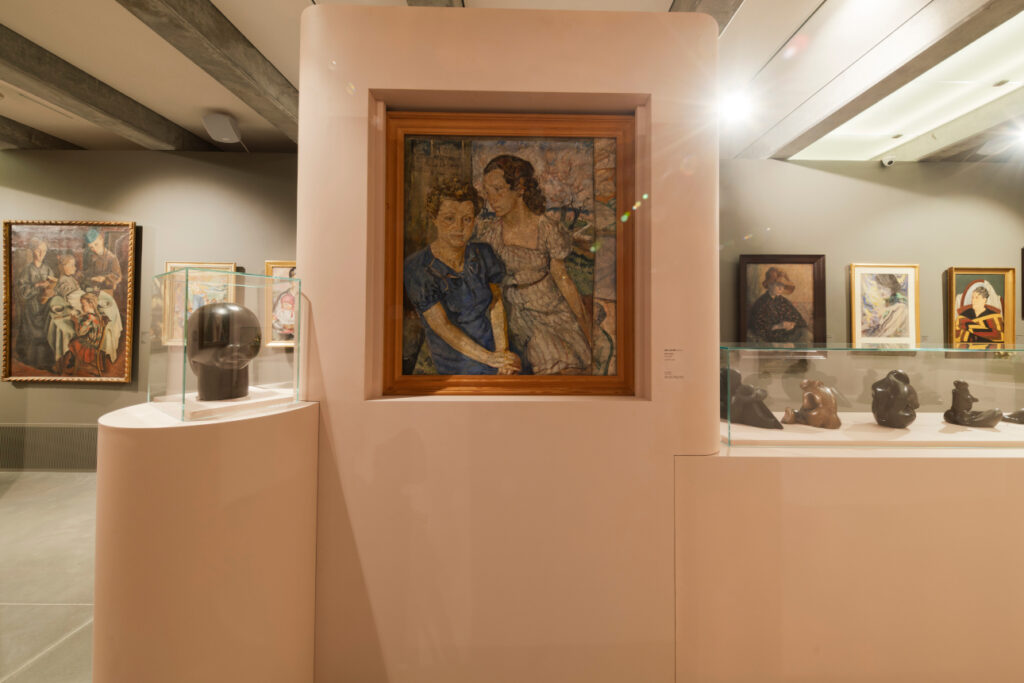
The fates of the women artists presented in this show were as varied as the lives of anyone who lived in the turbulent early twentieth century. Some of these artists ceased working after they got married and had children (a fate typical of middle-class women artists up to the 1950s), some of them emigrated from Poland due to the war and post-war political changes, many Jewish artists perished in concentration camps, and some survived the war itself but struggled to survive the harsh conditions of the new communist state.
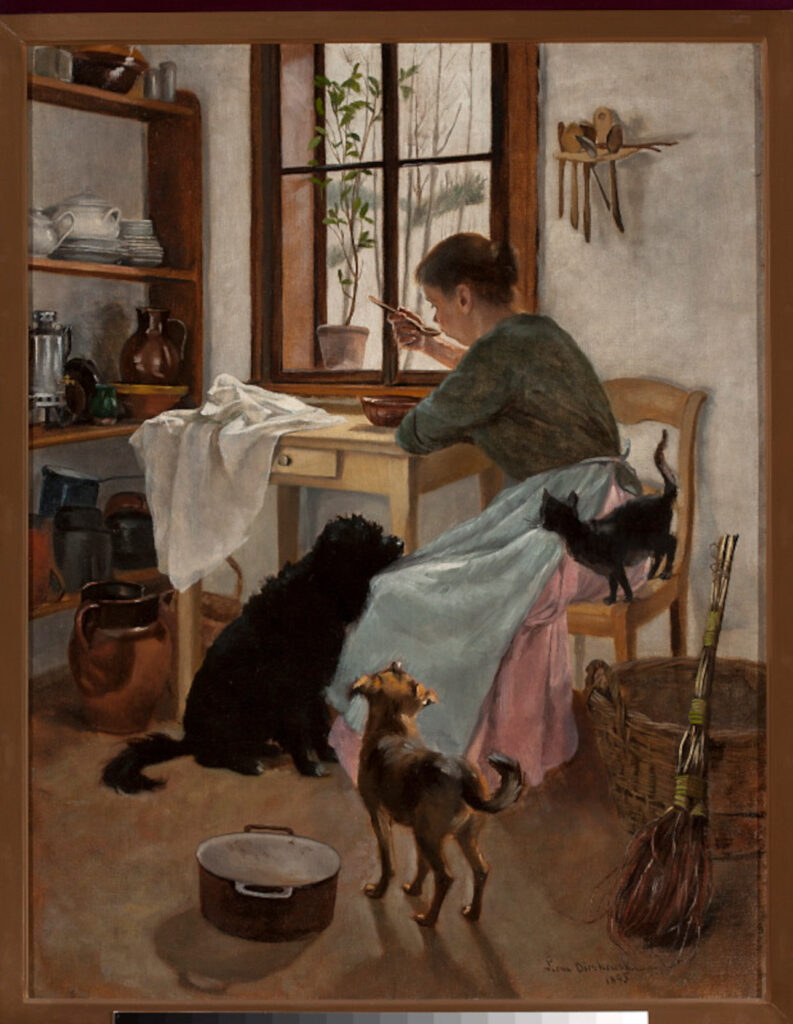
Many of the works are portraits—of friends and family and very often of children—subjects that any woman could paint without leaving the house. There is even a corner of the exhibition devoted to portraits of women and their cats. You can imagine a quiet painting session with the model sitting still with a sleeping feline in her lap.
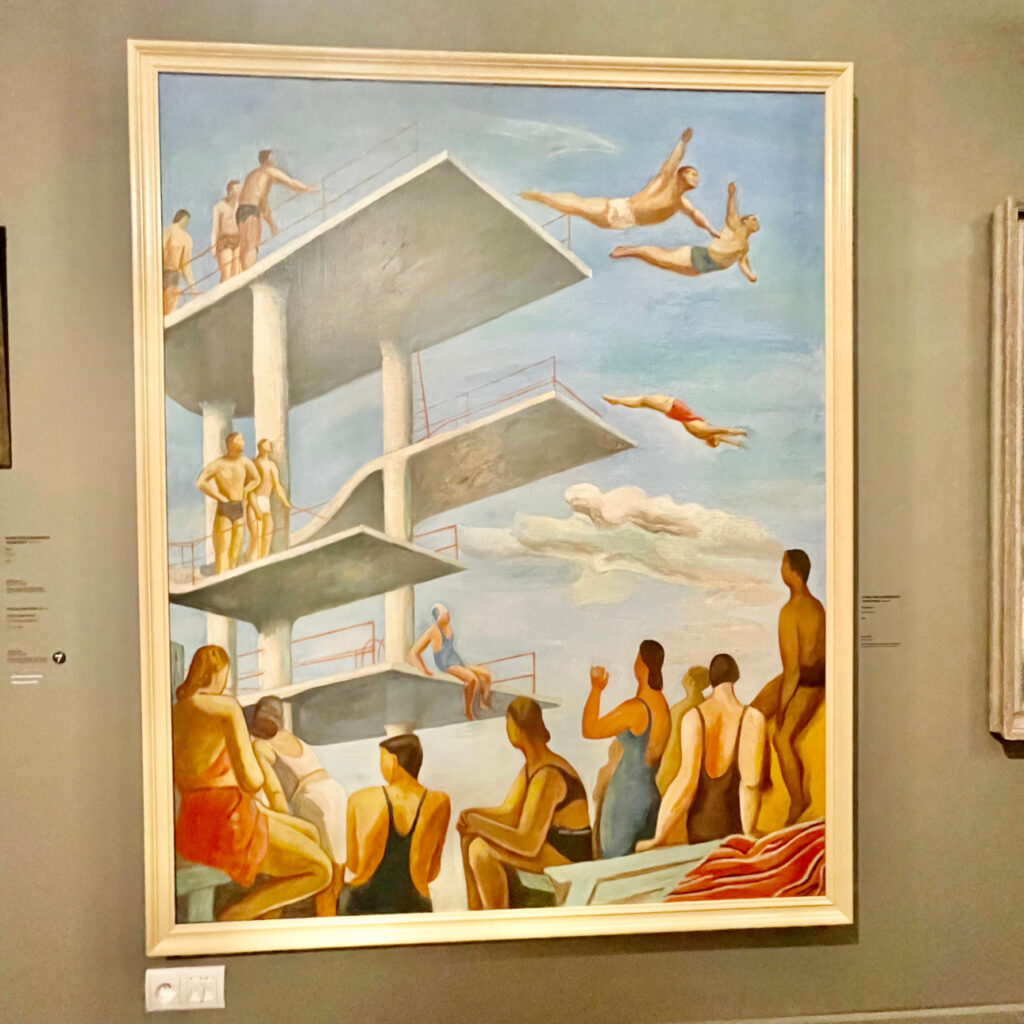
This is not to say that the paintings were limited to flower compositions and portraits. Especially in the post-WWI period, when Poland finally regained independence and women emancipated beyond traditional household roles, artists would seek “modern” subjects like sports or the nascent automobile industry, often rendering them in avant-garde styles like Cubism or Expressionism. The painting by Maria Ewa Łunkiewicz-Rogoyska titled Swimming Pool is a perfect example of the enthusiasm for technology, sports, and the modern way of life that was typical for artists in the interwar period. It is extremely well composed as a view from the ground of graceful divers flying off into the air from the highest diving board. This is a fantastic painting that likely would have remained in obscurity if not for this exhibition.
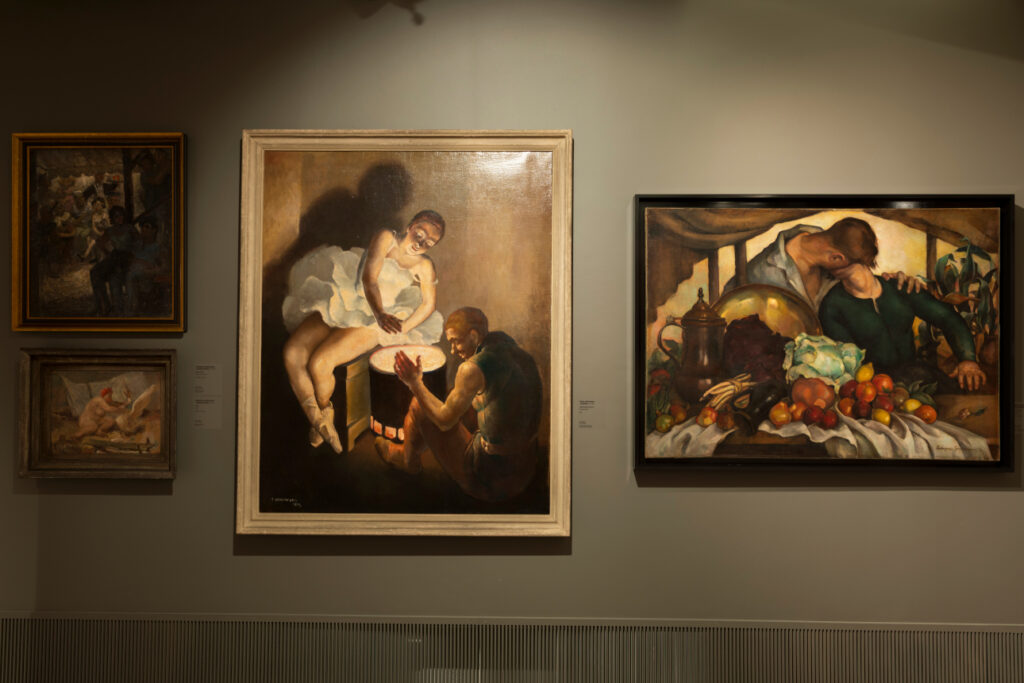
The National Museum’s exhibition, “Polish Women Artists 1850-1950” took place at Lublin Castle between April 26 – October 5, 2025.
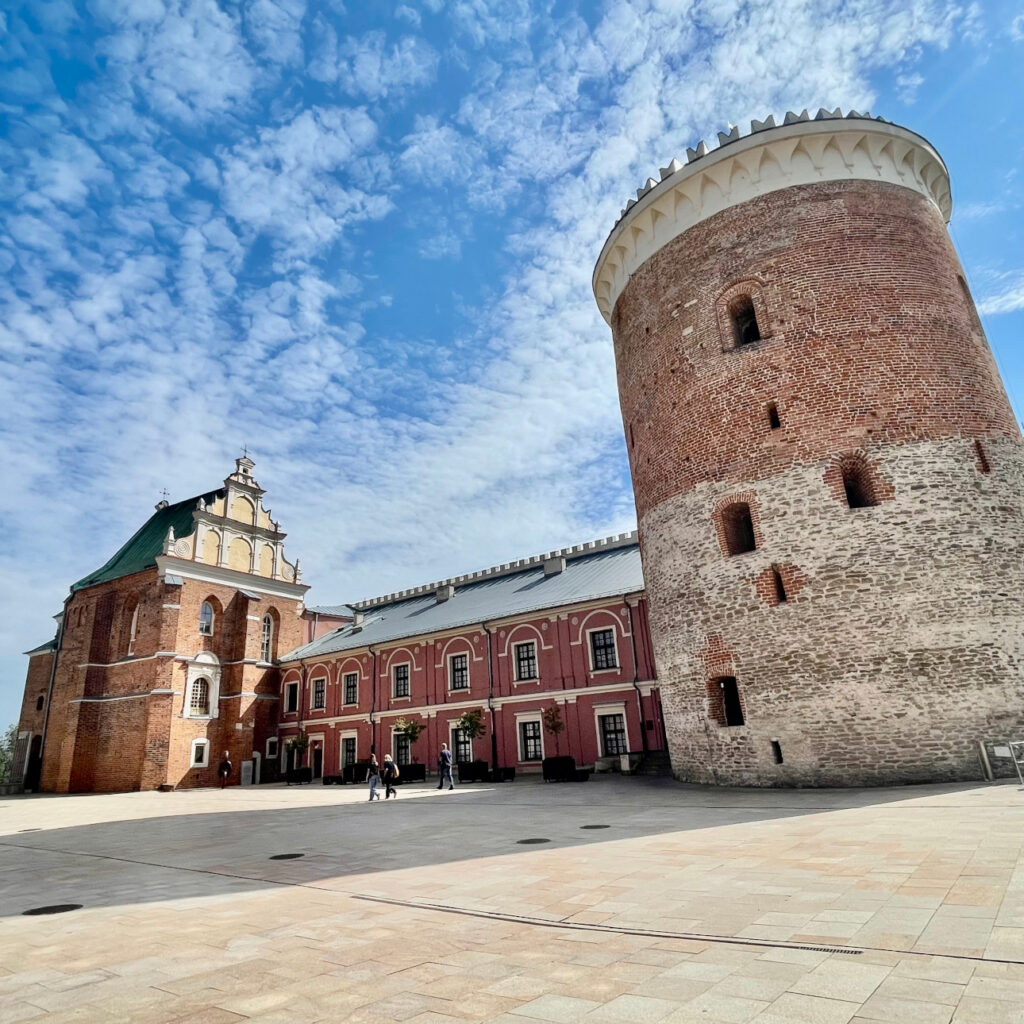
The exhibition was held in the historic Lublin Castle complex, which also includes a 14th-century chapel labeled as a European Heritage site due to its unique painted walls. The original frescoes went into disrepair and oblivion when the castle was plundered during the 17th-century Swedish wars. The walls got covered by plaster and lime whitewash, and during the Russian occupation the building served as a local prison. The frescoes were only rediscovered after Poland regained independence in the 1920s, and they were not properly restored until 1995.
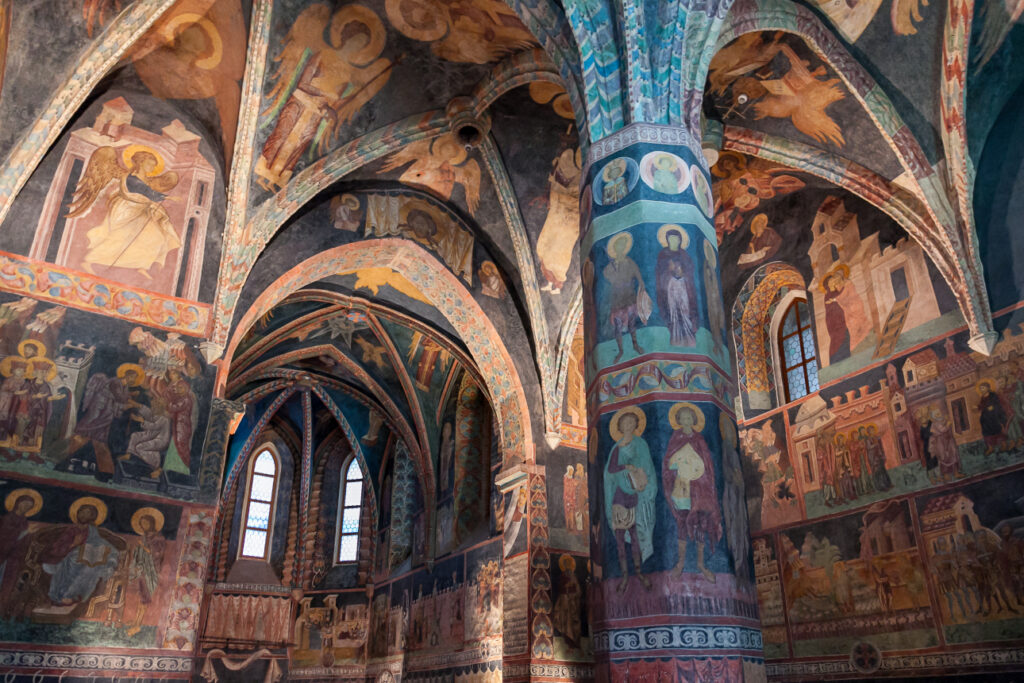
The chapel features unique Byzantine-style frescoes that were commissioned by one of the most prominent Polish kings, Władysław Jagiełło (1362-1434), who was a Lithuanian ruler invited to join the two lands. His dynastic marriage to Polish Queen Jadwiga (1374-1399) created the great Polish-Lithuanian Commonwealth—a vast kingdom that survived for several hundred years until Poland started losing independence in 1772. The king was actually formally elected to be the king of Poland in 1383 inside this very castle. The symbolic fresco image below shows the king pulling up his white horse to receive a cross and a crown from an angel.
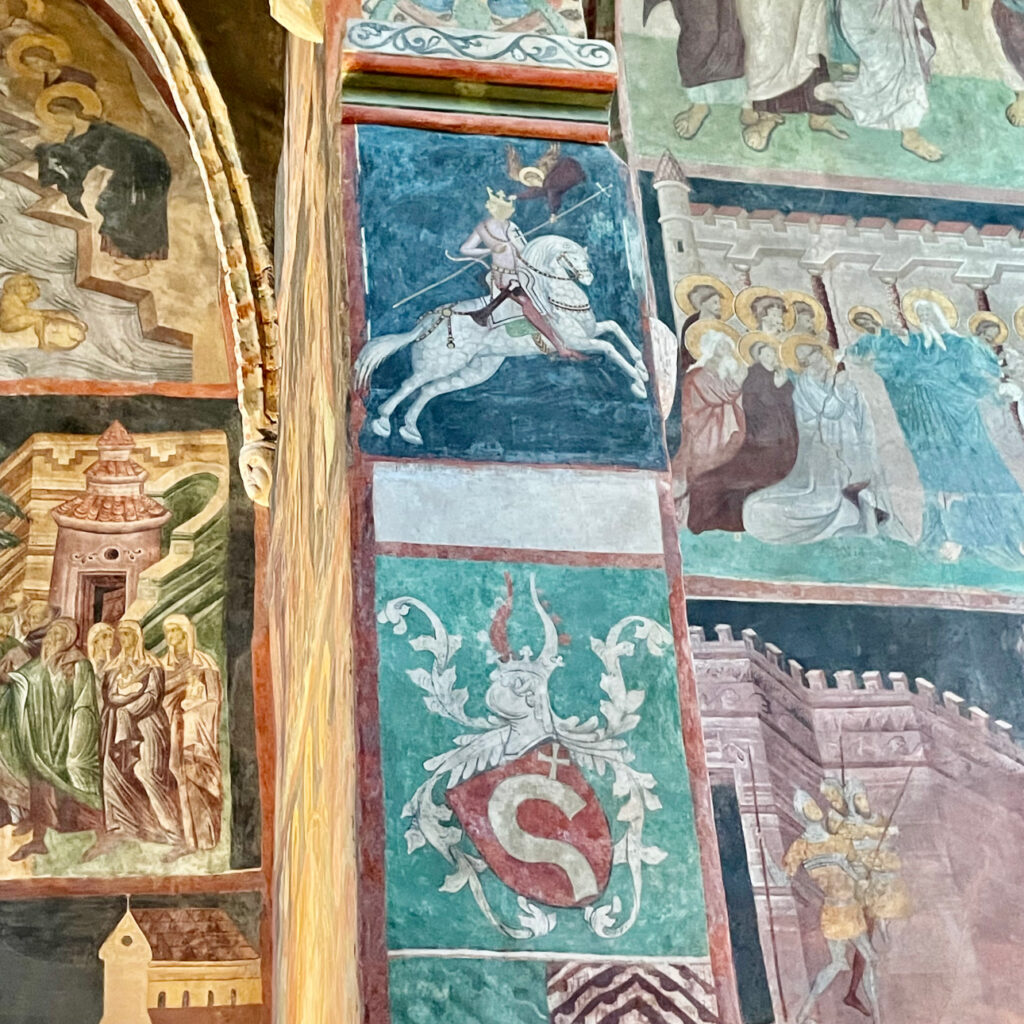
Jagiełło himself was raised in the tradition of Eastern Orthodox Christianity, so when he funded decoration of this chapel, he chose matching iconography.
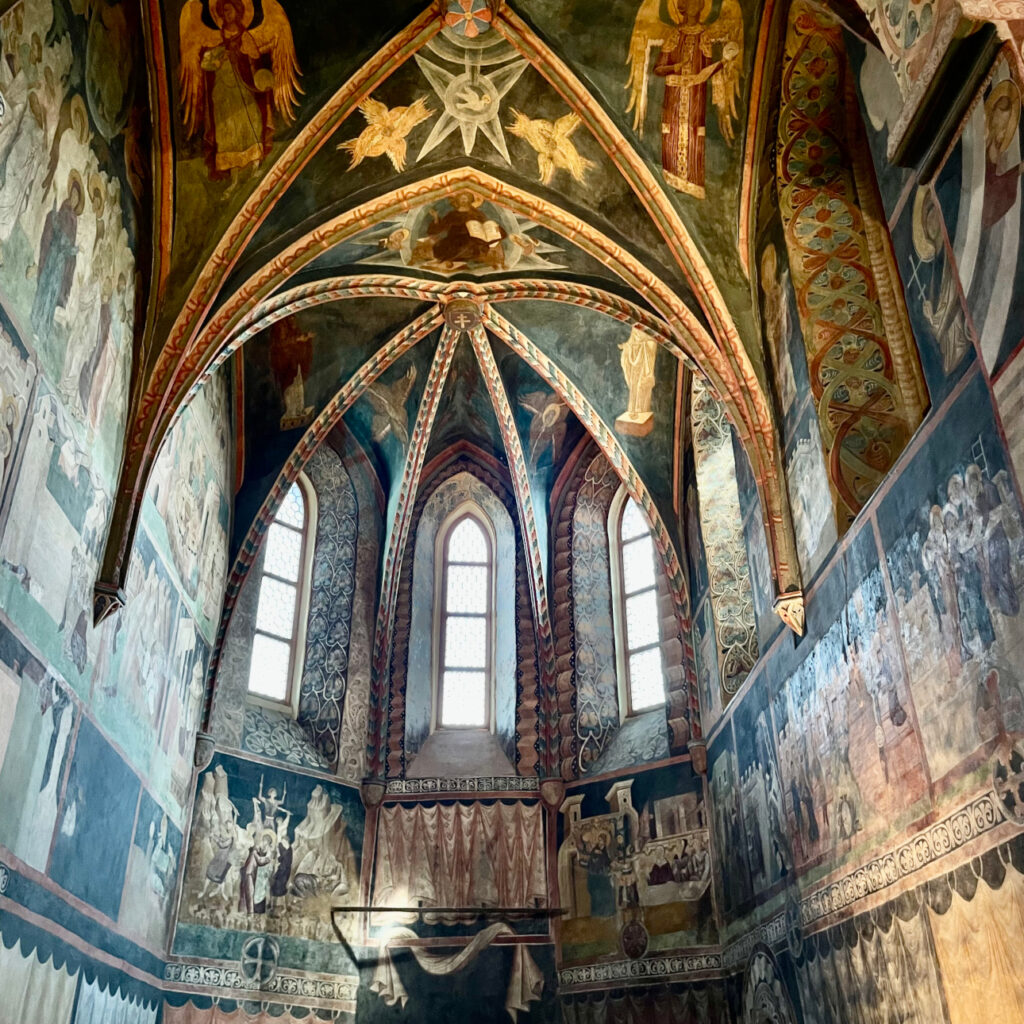
Paintings that cover every inch of the ceiling, columns, and walls are devoted to an evangelical cycle and various Gospel scenes, painted in the Greek Orthodox style of decoration that was fast disappearing in the churches of Western Europe, to be replaced first by International Gothic and then the Italian and Northern styles of the Renaissance.
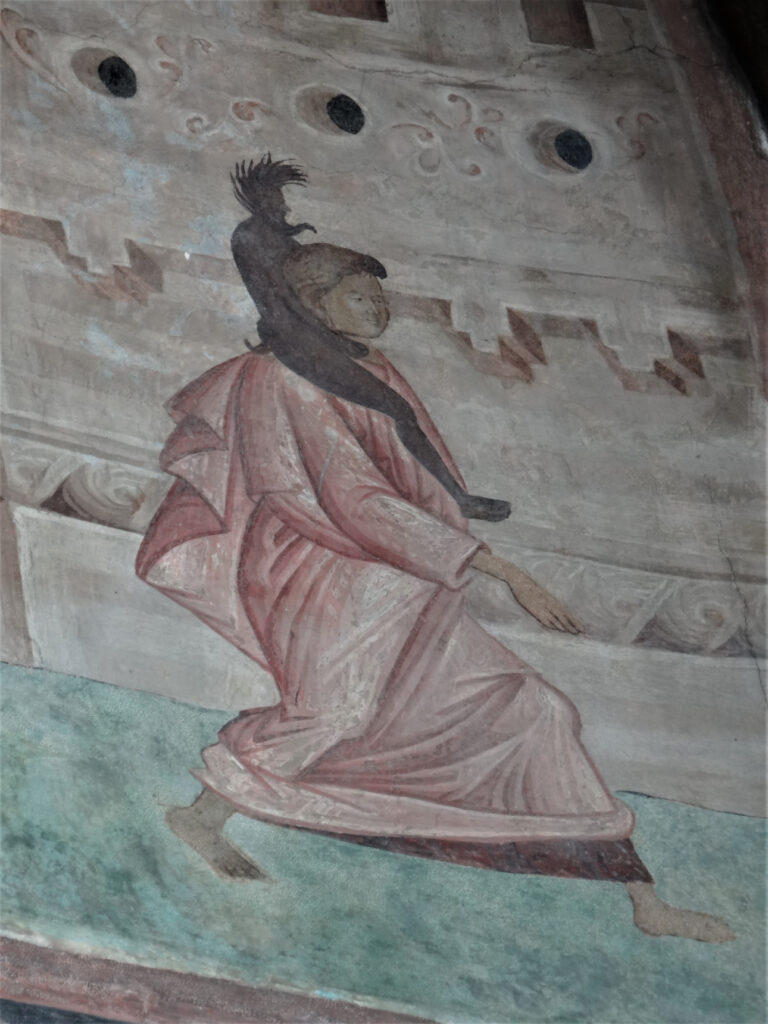
Some of the frescoes have a charming literal message, like this image of Judas, whose ill intentions are signaled by a devil sitting on his shoulders. Conversely, an angel is represented here as a winged and haloed being with front wings that make it look like a dove—a symbol of the Holy Spirit.

But it is the ensemble of these images, covering all the walls and ceiling of the chapel, that make the biggest impression. As in many medieval churches, the painters who worked on the walls of this chapel were anonymous, but they were led by a master painter who was identified. The chapel bears an inscription that says, “Walls were completed on St. Laurence’s day, 10th of August 1418 with Andrei’s hand,” and there are names of other principal artists included in the decoration.
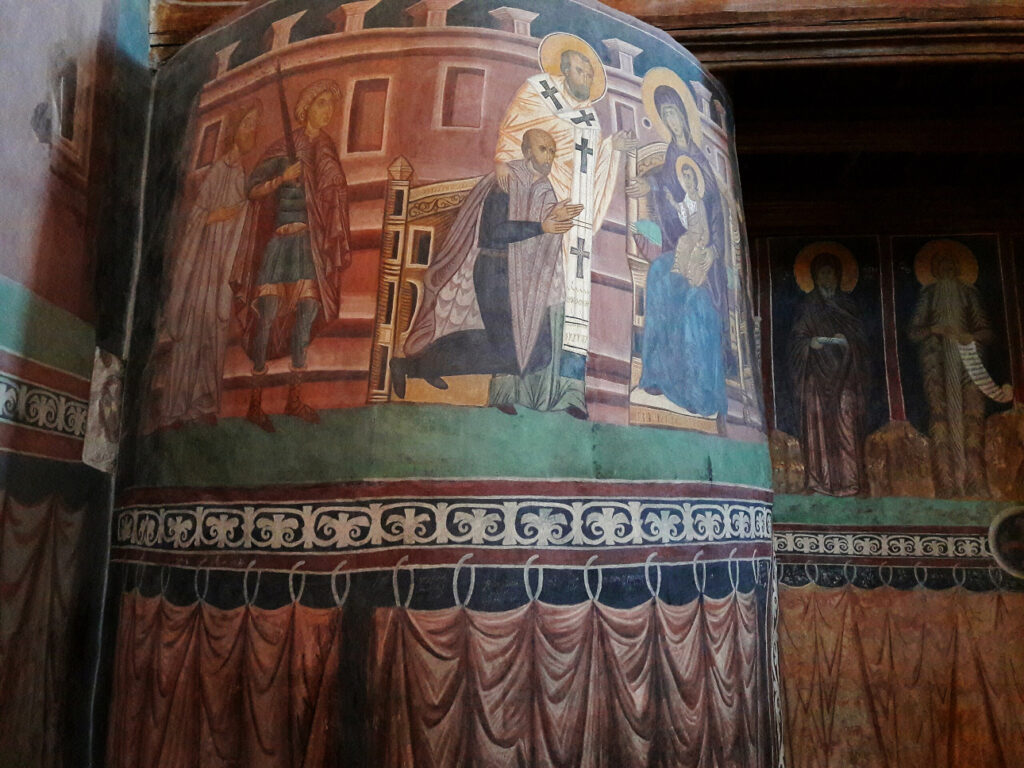
This meticulously painted room, still bearing the names of its creators, feels like a message from a faraway past—no longer a ceremonial space, but a testimony to lives long past of both kings and craftsmen.