
Food for the Soul: Women Artists – Mela Muter
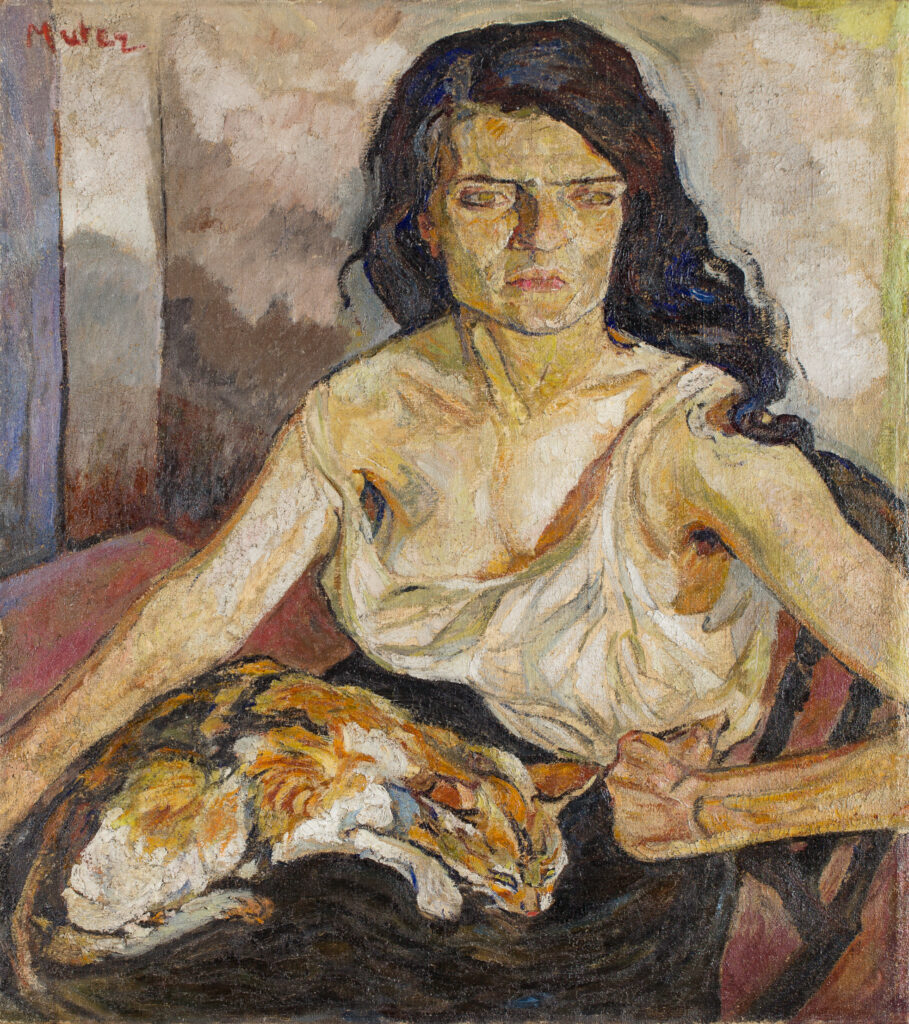
By Nina Heyn
In the history of art, the recognition of women artists beyond academic circles is really a 21st-century phenomenon. The early Baroque Italian artist Sophonisba Anguissola (1552-1614) was only recently credited as the author of major Spanish royal portraits. Thanks to several exhibitions and Internet fame, Artemisia Gentileschi (1593-1653) is now almost a household name in the “women artists” category, whereas she went virtually unacknowledged in the previous 300 years. Numerous, lesser-known and long-gone women artists are also now receiving recognition in their own countries, even if that fame is limited. An example would be Finnish painter Helen Schjerfbeck (1862-1946), who was active in Paris but hardly known in France until recently; the growing recognition is mainly due to a retrospective at the Met in New York only last year.
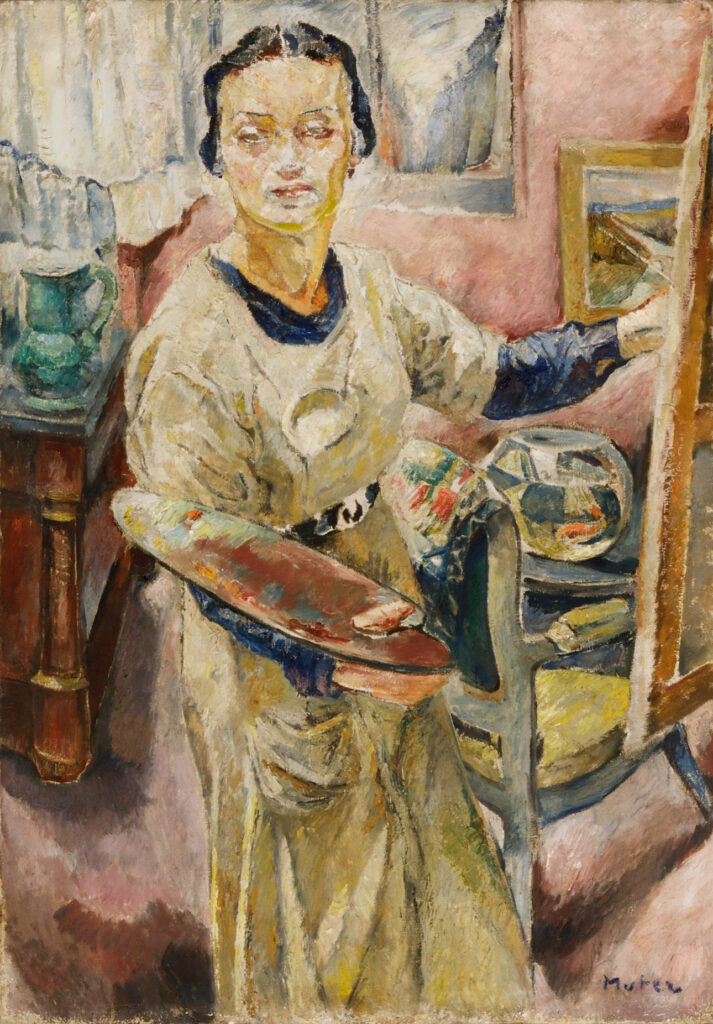
Another one is Mela Muter (1876-1967), a painter who, like Schjerfbeck, was active in Paris, but who is barely known there and whose fame in her native Poland is just beginning. This will probably change somewhat due to a retrospective exhibition that has just opened in a private museum near Warsaw to celebrate the 150th anniversary of the artist’s birth. Villa La Fleur is a museum focused on Art Deco, and particularly a movement called École de Paris, which describes artists who were active in Paris in the first 30 years of the 20th century and who often hailed from Poland and other Central European countries. Located in a historic, meticulously restored 19th-century villa near Warsaw, the museum is known as an initiator of excellent thematic exhibitions devoted to artists such as Tamara de Lempicka and Zofia Stryjeńska.
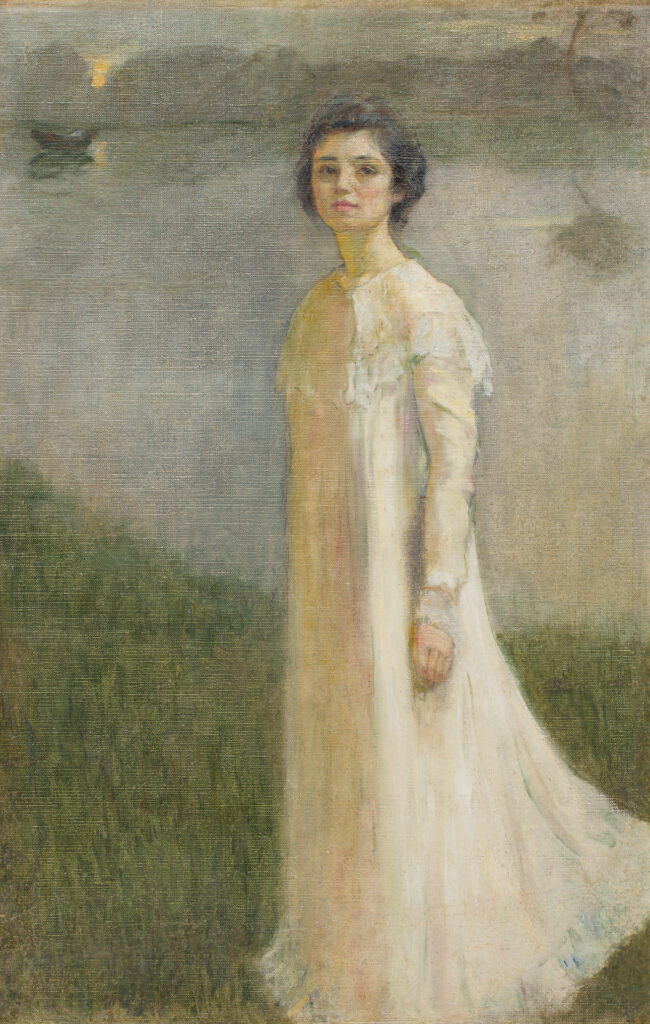
Mela Muter was born in Warsaw to an affluent Jewish family, but she did not spend much time in her native Poland. She left for Paris in her twenties, never to return. The Paris of the early 1900s was an exhilarating place to be for a painter—all the new styles from Cubism to Fauvism were about to come in, and artists from all over the world, including Japan and Brazil, were flocking to the city. Mela—young, beautiful, and talented—soon charmed her fellow artists, as well as writers, poets, and prominent society figures. Over the span of a few decades, she would paint a lot of them, would have romances with a few of them, and would eventually be forgotten by all of them.
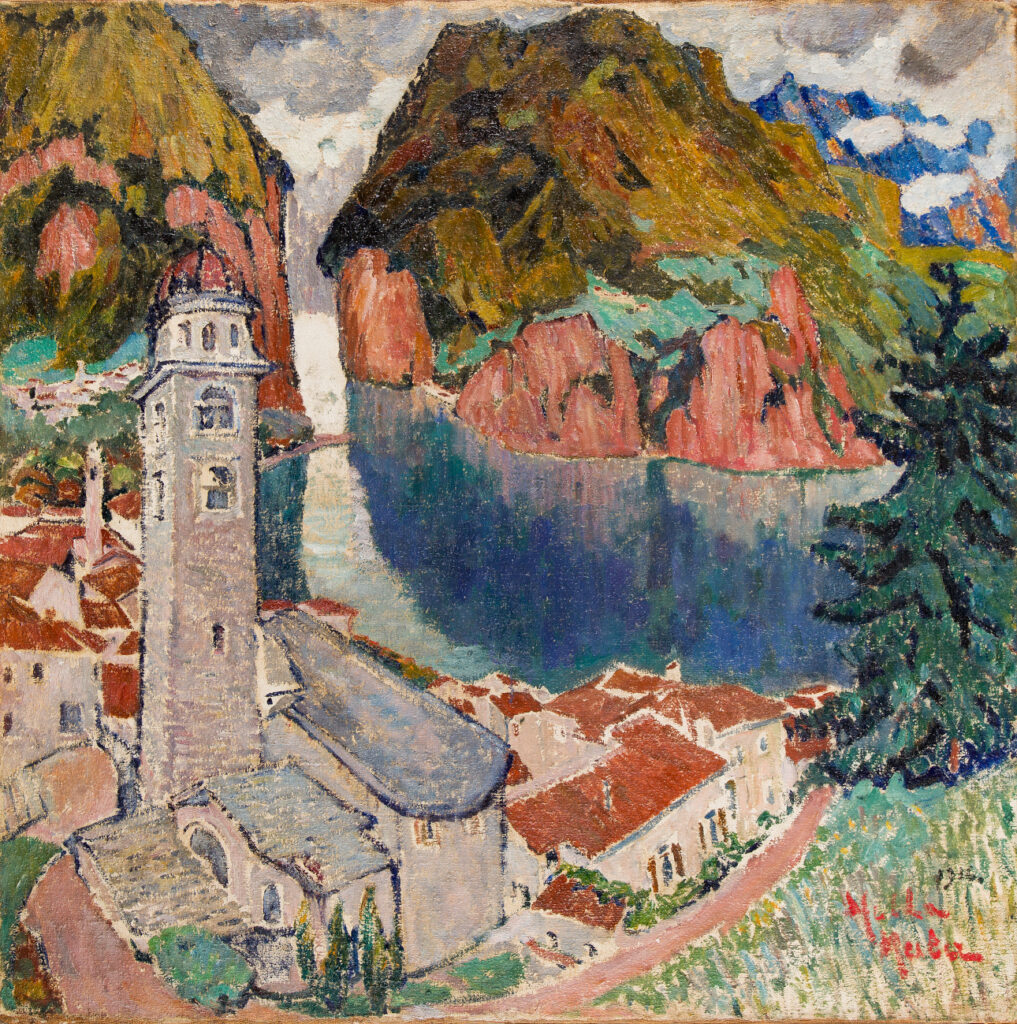
Her visit to the Pont-Aven artists’ colony, tracking the influences of Gauguin, resulted in her first landscapes and even some still lifes, genres she would continue painting throughout her life. But her heart was really in portraying people—and very often, the ones who were overlooked by society.
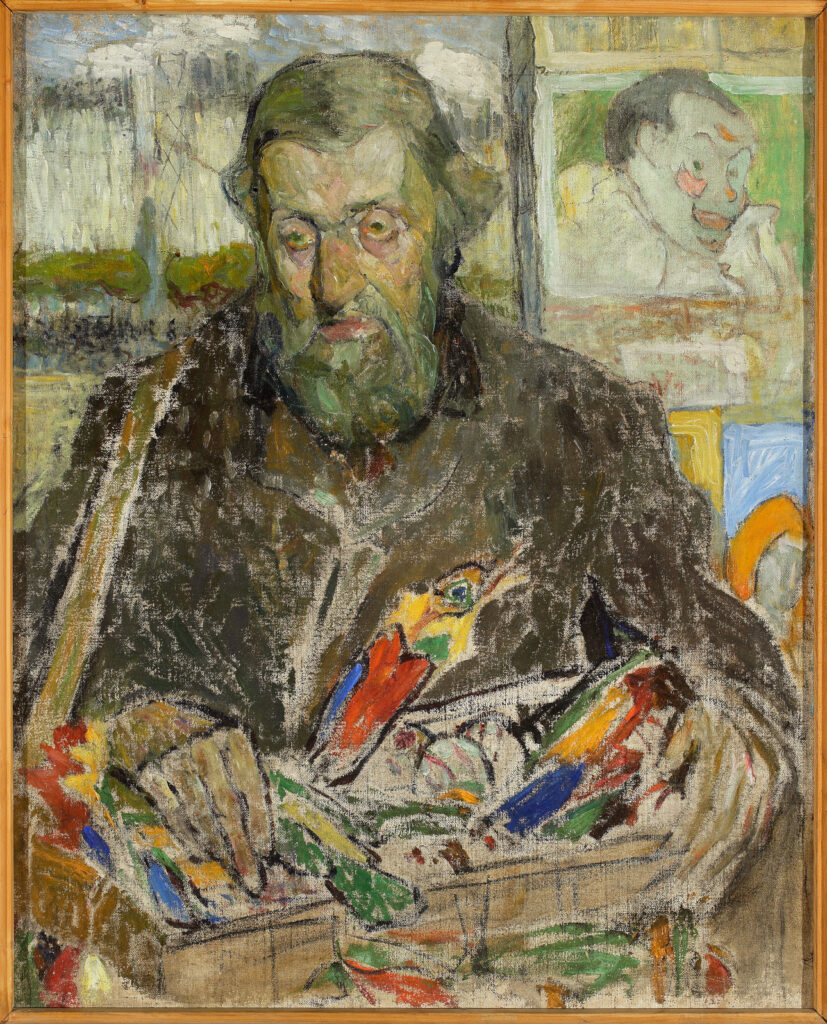
Mela would paint blind soldiers (she took care of them during WWI), street musicians, disabled children, and village beggars. She would often paint old people, like a man offering toys from a tray in front of a store. It is not only his tired face with downcast eyes that contrasts with the colorful trinkets; a grinning clown in the window behind him also provides a bitter counterpoint. There is nothing childlike in the mood of this picture.
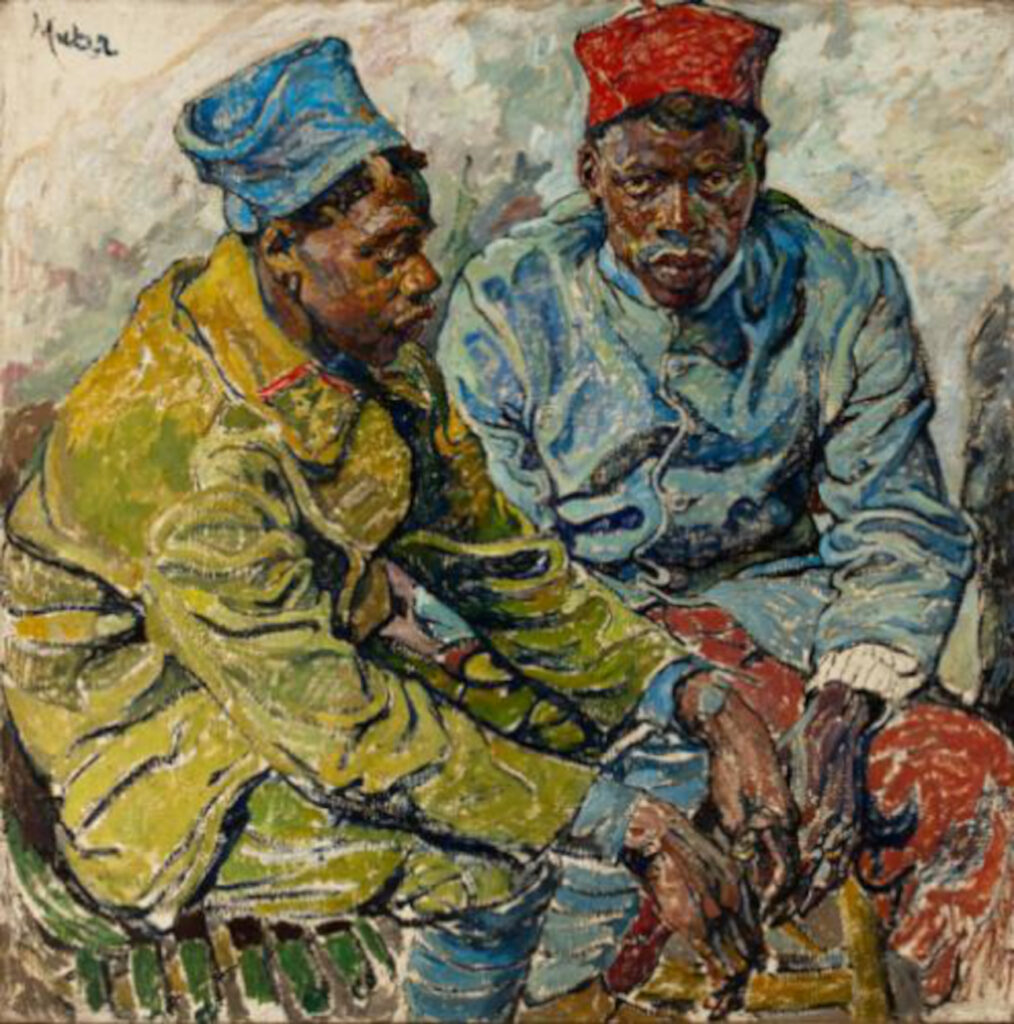
Even when she painted uniformed soldiers during WWI, she chose to portray two Black foot soldiers from a colonial regiment—an image of soldiers very far from the military glory depicted in typical portraits of uniformed men.
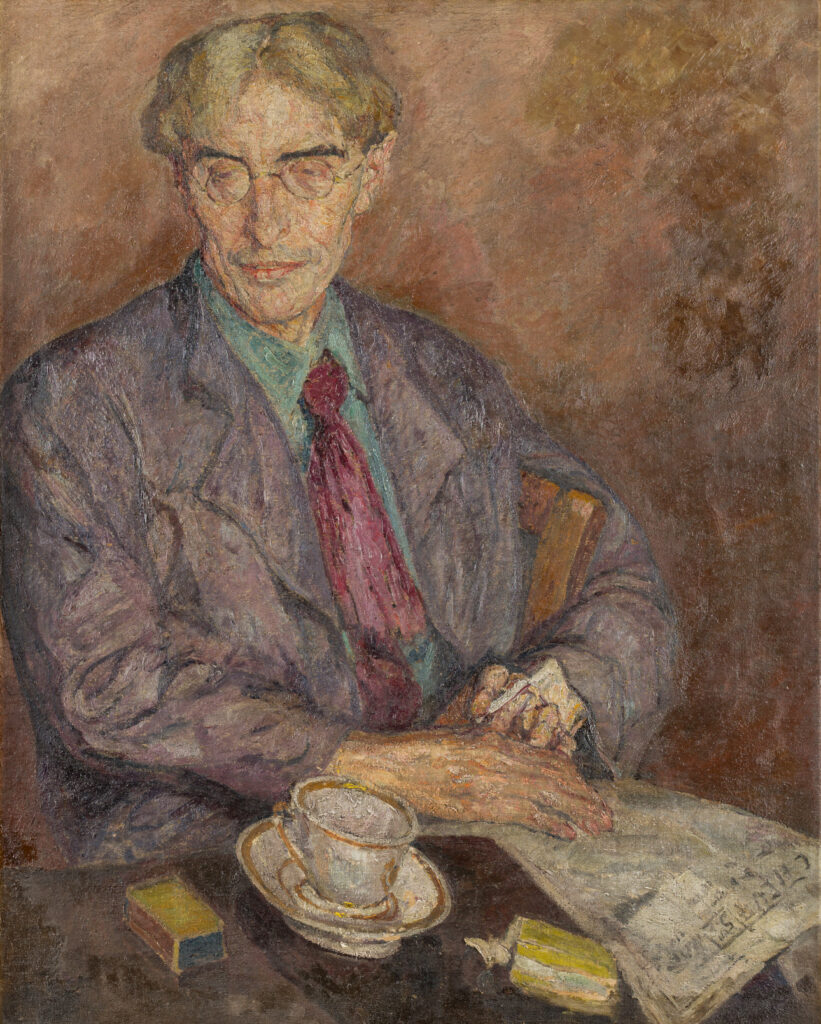
Muter’s life was punctuated by tragic deaths and misfortunes. When she was a child, her older brother drowned at age 15. Her mother never recovered from this blow, despite having Mela and her three siblings. Mela herself lost her only and beloved son Adam. He became ill in his teenage years and passed away at age 24, most likely as a result of a bone cancer. Muter, similarly to her mother, was eternally scarred by this loss.
Muter was generally not very lucky in her love life. In 1920, when she was still married but already estranged from her husband, she fell hard for the leftist writer and political activist Raymond Lefebvre who, like many European intellectuals of the period, had become fascinated by communism. He secretly traveled to the Soviet Union to see the proletariat state’s achievements for himself, only to die in mysterious circumstances. Muter, who was even hoping to marry Lefebvre one day, saw her hopes of happiness crumble. Over the years, she was the muse (and possibly the lover) of a few famous writers and artists, but each time the relationship would fall apart or Mela would be replaced by another woman. The only traces that these relationships would leave were in Mela’s portraits—complex, psychological, and sometimes the best portraits ever made of these famous people. She also painted writers like Roger Fry and Anatole France, composers like Maurice Ravel and Darius Milhaud, poets like Rainer Maria Rilke, and many others, including diplomats, artists, and singers.
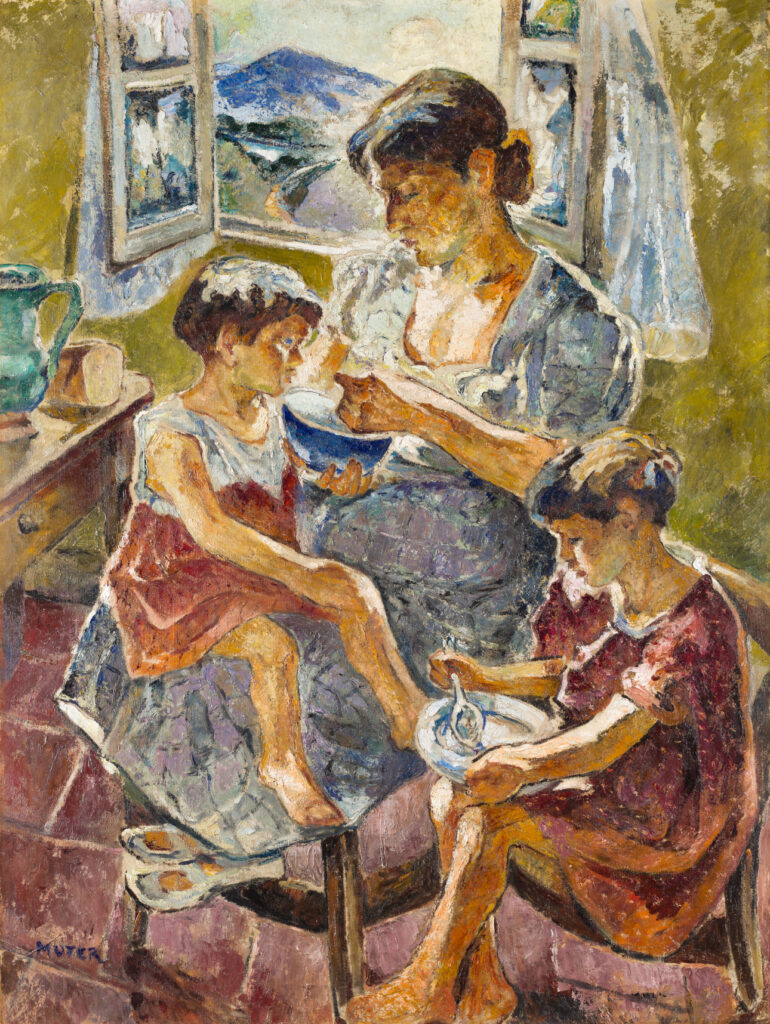
A large portion of Mela’s iconography consists of her paintings of motherhood. Her own experiences were not good, since her own mother was cold and unapproachable, and her son passed away young after a long illness. Some of these bad experiences come through in Mela’s paintings, as when she portrayed women holding their children almost absentmindedly, and often with an unsmiling face.
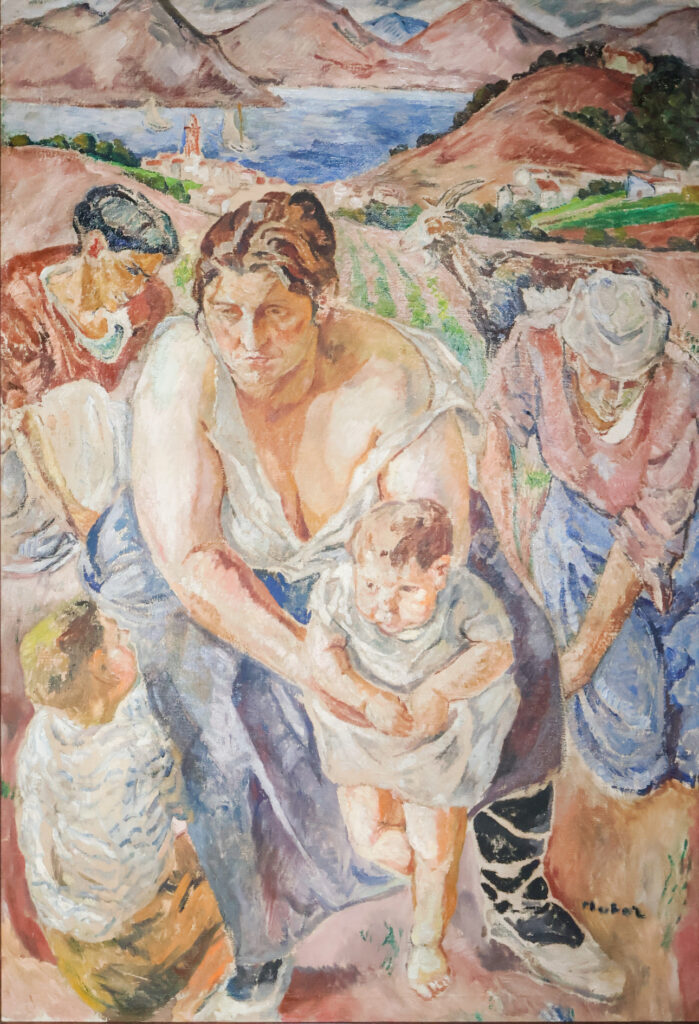
The hardship of motherhood for the poor is quite evident in her paintings of peasant women. She would choose models among villagers in places she visited—in rural Poland, in Brittany, or on the Spanish coast—looking at those on the lowest rungs of the social ladder, with hardships etched on their faces. She painted them so tired from their daily toil that they would not even engage with their offspring beyond carrying or feeding them.
Mela’s own life was marked by constant blows, some within her family like the death of her son and some caused by the times in which she lived. She experienced the two world wars, with the second one taking almost all of her Jewish relatives and friends who lived in Poland. After WWII, Mela’s artistic popularity waned with the advent of new styles and the arrival of trendy Abstract Expressionist and later Pop artists. Following her WWII exile in the south, she returned to live in Paris, but she could not regain her pretty Paris villa because the famous painter Jean Dubuffet appropriated it during the war and would not give it back.
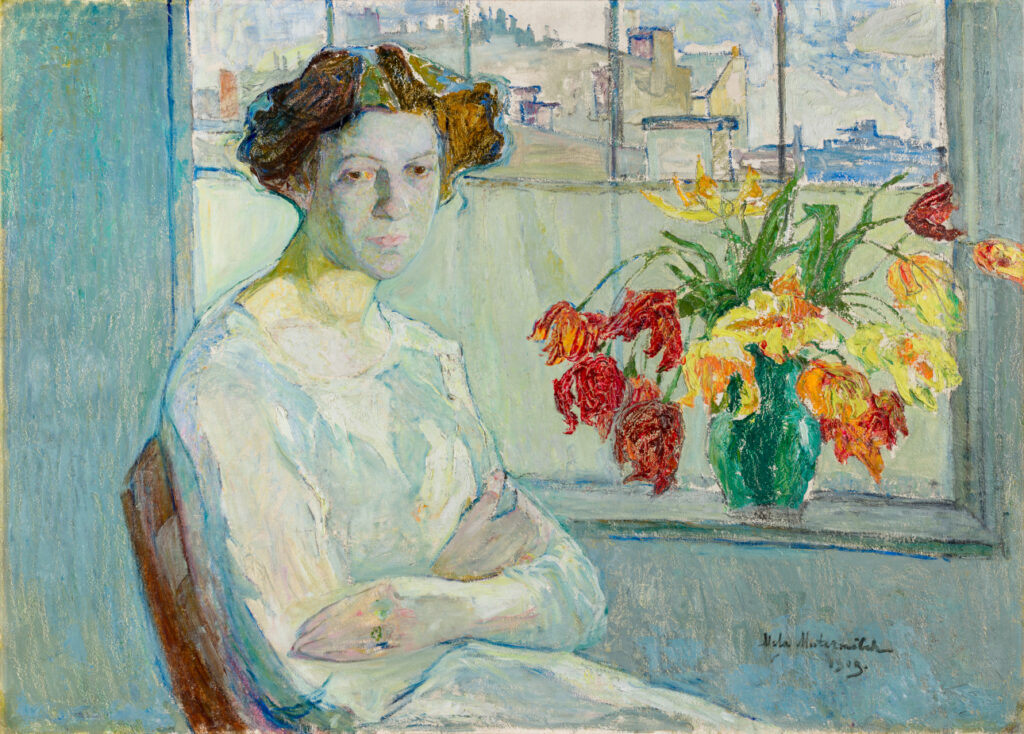
In the 1950s and 1960s, Mela lived in poverty and obscurity. Her paintings were languishing in damp storage until the son of one of her friends started taking care of this elderly woman by organizing her personal life and salvaging her artworks from mice and water damage. When she died in 1967 in Paris, she was virtually unknown, both in her native Poland and in France—the country that previously had awarded her the Legion of Honor and feted her artwork in the heady 1920s.
This exhibition brings out the most moving aspects of Mela Muter’s art—her empathy for the dispossessed and the least imposing members of society, and her images of the quiet sacrifices of motherhood or the suffering of spiritual loss or death—all expressed in her very modern and idiosyncratic style of painting. Muter may have been part of the École de Paris movement, but she had her own style, and she never easily fit into categories. Her compassion for the least powerful in the society had never waned—she made a beneficiary of her will an organization of fostering children called “SOS Villages d’Enfants” (it has now been renamed “Fondation Villages D’Enfants Ensemble” and it still protects siblings from being separated when fostered).
The exhibition titled “Mela Muter. Compassion for the world” is running between Sept. 19, 2026 and Feb. 28, 2027 at Villa La Fleur Museum in Konstancin, Poland. In March 2027, the exhibition will move to Musée de Montmartre in Paris.